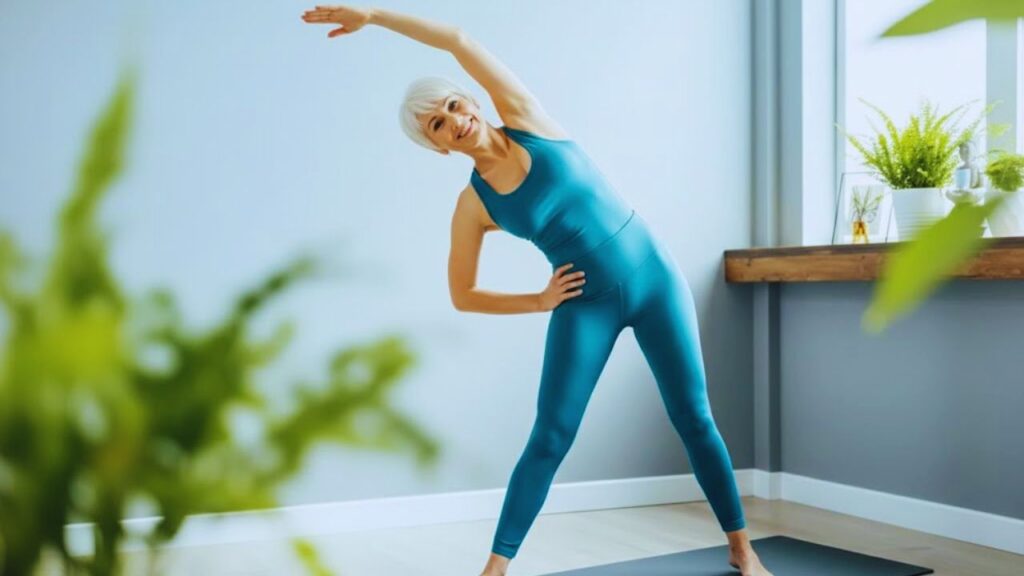
These 11 balance exercises are specially designed for older adults to help reduce the risk of falls and improve everyday stability. Falls are one of the leading causes of injury in people over the age of 65. Practicing balance movements regularly strengthens muscles, improves coordination, and supports independence as you age.
Why Balance Matters as You Get Older
Good balance allows you to move confidently during daily activities such as walking, bending, or climbing stairs. Strong balance reduces fall risk, protects your joints, and helps your body recover quickly if you feel unsteady. Building balance also supports an active and independent lifestyle.
1. Controlled Weight Transfers for Body Awareness
Weight-shifting exercises help your body learn how to adjust smoothly when your center of gravity changes. This awareness is essential for preventing falls during simple movements like turning or reaching.

2. Standing Heel Lifts to Strengthen Ankles
How to do it: Stand with feet hip-width apart. Hold a chair or counter for support if needed. Slowly lift your heels so you rise onto the balls of your feet. Hold for one to two seconds, then lower your heels back down.
3. Forward and Backward Stepping for Stability Control
How to do it: Stand with feet hip-width apart and arms relaxed. Step your right foot forward, then return to start. Step it backward and return. Repeat with the left foot. You may alternate legs or complete all repetitions on one side first.
4. Feet-Together Standing to Improve Core Balance
How to do it: Stand with arms out to the sides and slowly bring your feet together until they touch. Hold as long as possible. Progress by lowering your arms, crossing them over your chest, or closing your eyes.
5. Walking with Head Turns for Coordination
How to do it: Walk slowly forward. While walking, turn your head to the right and look over your shoulder, then return to center. Repeat on the left side. Continue alternating as you walk.
6. Side-to-Side Stepping for Lateral Balance
How to do it: Stand with feet hip-width apart and toes forward. Step to the right with your right foot, then bring your left foot to meet it. Continue in one direction, then return the opposite way.

7. Forward Step-Ups to Build Leg Strength
How to do it: Stand in front of a step or low platform. Step up with your right foot, then bring the left foot up. Step down with the left foot, followed by the right. Alternate leading legs each time.
8. Side Step-Ups for Hip Stability
How to do it: Stand sideways to a step. Place the foot closest to the step on top, then bring the other foot up. Step down in the same order. Complete repetitions on one side, then switch.
9. Heel-to-Toe Standing for Balance Focus
How to do it: Stand with arms out to the sides. Place one foot directly in front of the other so the heel touches the toes. Hold as long as possible, then switch sides. Increase difficulty by lowering your arms or closing your eyes.
10. One-Leg Standing for Overall Stability
How to do it: Stand near a sturdy surface. Lift one foot and balance on the other leg. Hold as long as you can, then switch sides. To progress, try closing your eyes or standing on a soft surface.
11. Cross-Step Walking to Improve Coordination
How to do it: Stand with feet hip-width apart. Step one foot across the front of the other, then step out to the side. Cross the foot behind, then step out again. Continue moving sideways, then reverse the pattern to return.