Fresh research is challenging the classic view of Parkinson’s disease as a purely brain-based condition and points towards an unexpected player: bacteria living in our mouths, capable of travelling through the body and quietly damaging the nervous system years before any tremor appears.
A familiar dental villain steps into the spotlight
For decades, Parkinson’s disease has been explained mainly through dying brain cells and misfolded proteins. That story is now gaining a surprising new chapter involving an ordinary culprit from the dentist’s chair: Streptococcus mutans, the bacterium notorious for causing tooth decay.
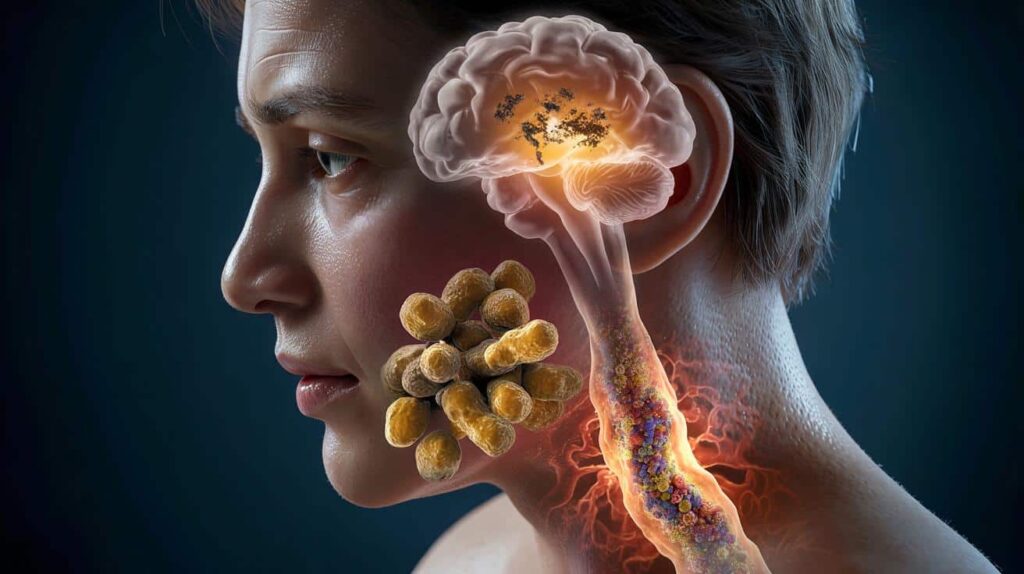
In a study published in 2025 in the journal Nature Communications, researchers traced how this mouth bacterium might influence the early stages of Parkinson’s. They found that S. mutans does not always stay confined to dental plaque. Under certain conditions, it appears to travel from the mouth to the gut, setting up residence in the intestinal microbiome.
Scientists are now seriously considering a “mouth–gut–brain” axis as a potential pathway in the development of Parkinson’s disease.
Intriguingly, the study reports that colonisation of the gut by S. mutans is more common in people already diagnosed with Parkinson’s than in individuals without the disease. That correlation does not prove cause, but it raises an uncomfortable question: is this seemingly harmless oral resident quietly helping to kick-start a neurodegenerative process?
From the mouth to the gut, then straight to the brain
Once S. mutans reaches the intestine, it does not just sit there. The bacterium produces a specific enzyme that leads to the formation of a compound called imidazole propionate. This molecule turns out to be far from innocent.
Imidazole propionate passes from the gut into the bloodstream. From there, it travels throughout the body and can cross the brain’s protective barrier. That barrier, designed to keep out most toxins and microbes, does not fully block this small metabolite.
Inside the brain, imidazole propionate activates a biochemical pathway called mTORC1, pushing vulnerable neurons closer to degeneration.
Animal experiments show that chronic exposure to this bacterial product leads to a progressive loss of dopamine-producing neurons. These cells, found in a region known as the substantia nigra, are the very ones that die off in Parkinson’s disease, leading to tremors, slowness and stiffness.
Researchers also observed increased brain inflammation and an abnormal build-up of alpha‑synuclein, a protein that clumps together inside neurons and is strongly linked to Parkinson’s pathology. The pattern of damage in the lab models mirrors what doctors see in the brains of people with the condition.
Why the mTORC1 pathway matters
The mTORC1 pathway acts like a control centre for cell growth, survival and energy use. In neurons, a balanced level of mTORC1 activity supports normal function. When imidazole propionate overstimulates this pathway, neurons become more fragile and less able to handle stress.
- Normal mTORC1 activity: supports cell maintenance and repair.
- Overactive mTORC1: disrupts cellular cleaning systems and promotes toxic protein build-up.
- Blocked mTORC1 (in animal tests): reduces brain damage and improves movement.
In other words, this bacterial metabolite appears to push an already vulnerable brain towards Parkinson’s faster and harder, especially in individuals with other risk factors such as genetics, ageing or environmental exposures.
Parkinson’s may start long before the first tremor
The work around S. mutans fits into a larger shift in how scientists think about Parkinson’s. Many now suspect the disease starts years, perhaps decades, before the classic motor symptoms. Early signs often include constipation, sleep problems or loss of smell, suggesting that parts of the body outside the brain are involved from the outset.
Rather than a disease that begins in the brain alone, Parkinson’s increasingly looks like a systemic condition with roots in the gut and, possibly, the mouth.
This idea changes both research priorities and the way prevention might be approached. If certain bacteria or their products help push the nervous system towards Parkinson’s, then the microbiome becomes a potential target for early intervention.
Could brushing your teeth lower your Parkinson’s risk?
The link between S. mutans and Parkinson’s is still under investigation, and no one is suggesting a toothbrush as a cure. Yet the findings hint that oral health might matter for the brain in ways that go far beyond a bright smile.
Good dental care limits the growth of harmful bacteria, including S. mutans. If those bacteria are less abundant in the mouth, there is less chance of them moving into the gut and reshaping the microbiome in a damaging way.
Regular brushing, flossing and dental check-ups may not only protect your teeth, but also reduce exposure to bacterial products linked to neurodegeneration.
Simple habits with potentially wider benefits
While researchers work on confirming the connection, the basic recommendations look very familiar:
- Brush teeth at least twice a day with fluoride toothpaste.
- Floss, or use interdental brushes, to remove plaque between teeth.
- Limit frequent sugary snacks and drinks that feed S. mutans.
- Visit a dentist regularly for cleaning and early treatment of cavities and gum disease.
- Avoid smoking, which disrupts both oral and gut microbiota.
None of these measures guarantees protection against Parkinson’s. The disease is complex, and genetics, age and environmental factors all contribute. Still, lowering the load of aggressive mouth bacteria is a practical step with clear benefits for general health and a possible bonus for the brain.
New treatment angles: from microbiome to molecules
The study also hints at future therapies targeting the microbiome or the chemical messengers it produces. If imidazole propionate and similar metabolites push neurons towards death, drugs that block their production, neutralise their effects or calm the mTORC1 pathway may slow down the disease.
In animal models, blocking mTORC1 activity protected brain cells and improved movement. Translating that into safe, long-term treatments for humans is a long road, especially since mTORC1 controls many vital processes outside the brain as well.
| Target | Possible strategy |
|---|---|
| S. mutans in the mouth | Better oral hygiene, dental care, targeted antimicrobials |
| Gut colonisation | Probiotics, diet changes, microbiome-focused therapies |
| Imidazole propionate | Drugs that block its formation or speed its breakdown |
| mTORC1 pathway | Carefully dosed inhibitors to reduce overactivation in neurons |
Researchers also caution that targeting one single bacterium may not be enough. The gut microbiome is a dense ecosystem. Shifts in one species can reshape others, so strategies will likely need to consider whole communities of microbes rather than isolated villains.
Key terms behind the headlines
Several technical ideas sit behind these findings, and understanding them helps make sense of the headlines:
- Microbiome: the collection of bacteria, viruses and fungi living on and inside the body. In the gut, these microbes help digest food, train the immune system and produce a wide range of chemicals.
- Metabolite: a small molecule produced when organisms, including bacteria, break down or transform substances. Some are beneficial, others can be harmful.
- Blood–brain barrier: a dense layer of cells around brain blood vessels that filters what can pass from the bloodstream into the nervous system.
- Alpha‑synuclein: a protein that can clump together inside neurons. These clumps are a hallmark of Parkinson’s and seem to damage cells over time.
For people already living with Parkinson’s, this line of research does not replace existing treatments, which mainly aim to boost dopamine or ease symptoms. Yet it suggests that combinations of therapies may one day include microbiome-based approaches, potentially alongside drugs, diet and lifestyle adjustments.
For those with a family history of Parkinson’s or concern about long-term brain health, the idea of a “mouth–gut–brain” chain offers a new way of thinking about risk: small daily actions, from dental care to diet that supports a balanced microbiome, might gently shift the odds, even if they cannot fully rewrite genetic cards.