The argument started with a photo of filthy paving slabs.
On a quiet Sunday morning, a British homeowner snapped a shot of their blackened patio, posted it in a Facebook cleaning group, and casually asked: “Any easy way to get this off?” Two hours later, the comment section had turned into a battlefield. Bleach lovers against eco-warriors. Pressure-washer fans versus “old-school” broom-and-bucket types.
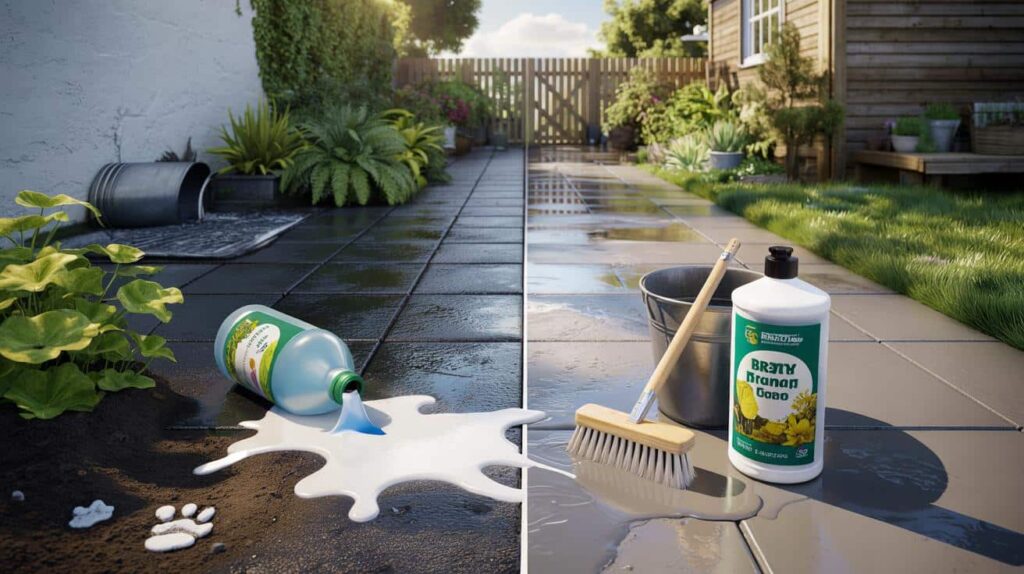
One comment, though, cut through the noise: “Just pour this on, leave it, rinse. No scrubbing. It’s like magic.”
People went wild.
Screenshots spread to TikTok, then to X, then to WhatsApp family chats. A “miracle” no-scrub method for patios… and a wave of outrage from those who say it’s reckless.
Some call it genius.
Others call it downright irresponsible.
And both sides think they’re right.
The viral ‘miracle’ method that split homeowners down the middle
The trick that keeps resurfacing is disarmingly simple.
Pour a strong mix of household bleach and water over blackened slabs, walk away for 20 minutes, come back, and rinse. No stooping. No scrubbing. No aching back the next day. Just lighter, cleaner paving stones that look like they’ve skipped a decade.
The photos are seductive.
Dark, algae-stained concrete turns pale and bright in a single afternoon.
People post “before/after” collages with captions like “Can’t believe this worked” and “Why did no one tell me this sooner?” One user admitted they’d done the whole patio in flip-flops, cuppa in hand, barely breaking a sweat.
It feels like cheating.
Scroll a little further, and you hit the backlash.
Gardeners and environmentalists pointing out that bleach doesn’t just “vanish” once it hits the ground. Neighbours complaining about white streaks running into shared drains. Dog owners swearing they’ll never forgive the stranger who bleached the communal courtyard where their pets play.
Then there are the photos people don’t always post at first.
The ones where the slabs have gone patchy or rough.
The jointing sand between pavers washed out. The border plants yellowed within days. A few even confess that their once “effortless” clean turned into an expensive lesson when a landscaper told them the surface had been weakened.
The miracle starts to look a bit less miraculous.
Beneath all the drama sits a pretty simple tension.
We want our outdoor spaces to look fresh, bright, and Instagram-ready, but we’re tired, busy, and not exactly thrilled at the idea of two hours on our knees with a stiff brush. Bleach feels like a shortcut, and shortcuts are tempting when you’re staring at a patio that’s gone almost black from algae and pollution.
Yet patios are part of a bigger system.
What you pour on them doesn’t stay put. It runs into soil, drains, water courses, the paws of the neighbour’s cat. That’s where the anger comes from: not just about “how” people clean, but what that choice quietly says about where the dirt is allowed to go.
It doesn’t disappear.
It just moves.
So, what actually works… without starting a war with your neighbours?
If you strip away the arguments, most pros still come back to the same steady method.
Start with a dry day and sweep the patio well to remove loose moss, leaves and grit. Mix warm water with a patio-friendly cleaner or simple washing-up liquid. Then work in small sections with a stiff outdoor brush, scrubbing the surface and rinsing as you go.
It’s not glamorous.
You’ll probably get splashed. Your shoulders might complain the next morning. Yet that slow, physical effort gives you control. You see which slabs are damaged, where pointing is missing, where water pools. You’re not just cleaning; you’re inspecting.
And on modern pavers, especially coloured or textured ones, that gentle approach often preserves both the look and the lifespan of the surface.
Many people who regret the “miracle” bleach method say the exact same thing: “I just wanted it done fast.”
We’ve all been there, that moment when you glance out of the window and suddenly see every dark stain like it’s shouting at you. The temptation is to nuke the whole thing with the strongest product in the cupboard, then close the door and hope for the best.
A more balanced approach is to think in layers.
Try water and a brush first. Then a specialist patio cleaner or a diluted white vinegar solution on stubborn patches, especially on natural stone where harsh chemicals can scar the surface. Keep pets and kids away while anything is wet, regardless of the product.
Let’s be honest: nobody really does this every single day.
But once or twice a year, done properly, can prevent that frightening all-black look that sends people hunting for “miracle” fixes.
The heart of the online dispute isn’t just about bleach. It’s about responsibility.
One member of a popular UK gardening group summed it up bluntly:
“Your patio doesn’t exist in a bubble. What you pour on it flows straight into someone else’s world.”
That comment gained thousands of likes and sparked a calmer kind of thread, where people began trading safer, realistic habits instead of insults. Among the most shared ideas were:
- Use purpose-made patio cleaners and follow the dilution rates.
- Test any product on a hidden corner first, especially on sandstone or limestone.
- Work on a dry day, but avoid blazing sun so products don’t dry too fast.
- Brush dirt toward a collection point, not straight into drains.
- Rinse thoroughly and keep pets and children away until everything is fully dry.
These aren’t glamorous tips.
They won’t go viral in the same way as a shocking before-and-after. *But they’re the everyday choices that keep patios clean without poisoning the mood on the street – or the soil under your feet.*
Between “miracle” and mindfulness: the real patio debate
Strip away the slogans and the sponsored posts, and the dispute over no-scrub patio methods is really a mirror.
On one side, the promise of ease: a bottle, a quick pour, a clean space you can be proud to show when friends come over for a barbecue. On the other, the quiet voice that asks: what does this cost in the long run, beyond the price tag on the label?
People share their success stories because they’re proud.
They share their horror stories because they don’t want anyone else to repeat their mistakes. Somewhere between those extremes sits the boring middle ground, where a bit of elbow grease, some targeted products, and a slightly slower pace might not make for a viral post, but does leave you with something sturdier than a fleeting “wow” moment online.
Next time you see a dramatic patio transformation pop up on your feed, you might pause before you rush to copy it. Ask what happened two weeks later. Ask what washed into the gutter. Ask how the slabs look this winter.
And then choose your own method, not just by how dazzling the “after” looks, but by how you want to feel about the ground you’re standing on.
| Key point | Detail | Value for the reader |
|---|---|---|
| Bleach “miracles” come with hidden costs | Fast, no-scrub methods can damage slabs, joints and nearby plants, and affect drains and pets | Helps you weigh speed against long-term impact before trying viral tricks |
| Gentler cleaning is slower but safer | Warm water, mild cleaners and a stiff brush protect most patio surfaces and surroundings | Offers a realistic, do-able routine that won’t backfire next season |
| Think beyond your own slabs | Runoff from patios ends up in soil, shared spaces and local waterways | Encourages more responsible choices that keep peace with neighbours and nature |
FAQ:
- Question 1Is it really that risky to use bleach on a patio once in a while?
- Answer 1On some hard-wearing concrete slabs, a carefully diluted, occasional use might not cause obvious damage, but the runoff can still affect soil, drains and nearby plants, and it can be harsh on pets’ paws, so many experts suggest safer cleaners designed for outdoor use.
- Question 2What’s a simple alternative to the “miracle” bleach method?
- Answer 2Brush the patio dry, then scrub with warm water and a dedicated patio cleaner or washing-up liquid, working in small areas and rinsing well; for algae, some people use diluted white vinegar on resistant spots, avoiding delicate natural stone.
- Question 3Will a pressure washer damage my paving?
- Answer 3Used on a moderate setting with the lance held at a slight angle, it’s usually fine on solid concrete or good-quality pavers, but a very strong jet too close to the surface can strip jointing sand, chip edges and etch softer stone.
- Question 4How often should I clean my patio to stop it turning black?
- Answer 4Sweeping once a week during leaf season and doing a deeper clean once or twice a year is enough for most homes, and staying on top of light algae early stops it becoming the thick black layer that tempts people into harsh fixes.
- Question 5Are “eco” patio cleaners actually effective?
- Answer 5Some newer eco-labeled products work well on general grime and light algae when used regularly, but heavy, long-neglected staining may still need more effort, so checking reviews and starting early in the season makes them more convincing.