The Quiet Revolution in Hair Color She looks at the silver streak running through her hair and sighs. “I’m tired of chasing my roots” she tells the stylist. The counter holds several bowls with labels like chestnut & espresso and iced mocha brown. None of them interest her anymore. She wants something different now. Something that feels easier and more natural. Not the traditional hair dye that everyone recognizes.
She needs an approach that feels subtle and forgiving and less like a constant battle. The stylist knows exactly what she means. She puts away the usual color swatches and pulls out a different guide instead. This one shows sheer tones and soft glosses and techniques that work with light rather than against it.
There will be no dramatic transformation today. No spending hours in the salon chair. The plan involves methods that help gray hair blend naturally and soften harsh lines and create a younger appearance without making it obvious that work was done. This marks the end of traditional hair dye as most people have known it. What comes next feels calmer and smarter and fits better into actual daily life. The shift is changing how people think about aging and how they present themselves to the world.
Moving from Full Coverage to Soft Grey Camouflage
Walk into any salon today and you will notice something different. Clients no longer ask for complete gray coverage. They want their hair to look natural instead of obviously colored. The problem with traditional dye is that it creates a flat appearance in daylight and looks fake when examined closely. The current approach focuses on gentle blending that lets some silver show through while controlling its placement.
Colorists now prefer semi-permanent washes and translucent tints over harsh permanent formulas. They use root shadows and glosses that catch the light. This method reduces the appearance of regrowth lines and shortens appointment times. Hair looks naturally refreshed rather than freshly dyed. The goal has shifted from hiding gray to making it work as part of your overall look.
A 52-year-old woman named Karen visited a small London salon with a common request. She wanted her gray hair to disappear completely. She had been coloring her hair every three weeks and felt exhausted by the constant regrowth. Her stylist suggested a different approach. Instead of solid coverage she recommended a soft mushroom-brown glaze over the entire head. She added ultra-fine highlights around the face and left the roots without heavy color.
How Grey Blending Transforms the Entire Face
When you walk into a modern salon today you will often hear clients say they do not want their hair to look obviously colored. People are not rejecting gray hair anymore. They are rejecting the flat and artificial appearance that comes from solid opaque dye. The current approach focuses on soft blending that allows some silver to show through while controlling where & how it appears. Colorists are moving away from harsh permanent formulas and using semi-permanent washes instead.
They also work with translucent tints and root shadows along with light-catching glosses. This approach creates fewer obvious regrowth lines and requires shorter appointments. The result is hair that looks refreshed rather than freshly treated. The goal is not to hide gray hair but to make it work as part of your overall look. This shift makes practical sense for several reasons. Solid dark color can create too much contrast around the face and make fine lines and shadows more noticeable. On the other hand bright white roots against dyed hair draw attention directly to the scalp. Blending techniques help solve both of these issues.
When you reduce contrast & add light around the face the skin looks brighter and features appear cleaner. The focus shifts to your expression instead of your roots. Many stylists compare this to contouring for hair because it uses light and depth to guide where people look. The gray hair is not removed but integrated into the overall style. This is not a magic solution but simply a smarter way to work with what is already growing. A 52-year-old woman named Karen visited a small London salon with a request her stylist had heard many times before. She wanted to make her gray hair disappear completely. Karen had been coloring her hair every three weeks & felt trapped in a cycle of chasing regrowth. Her stylist suggested a different approach using a soft mushroom-brown glaze over the entire head with very fine highlights around the face. There would be no solid root coverage this time.
The Modern Approach to Younger-Looking Grey Hair
The most popular technique today is called gray blending. It focuses on working with your natural gray hair instead of hiding it completely. The stylist applies color in specific sections rather than covering everything. A light demi-permanent color softens the brightest white hairs & subtle lowlights add dimension.
Very fine highlights around the face help break up any noticeable gray patches. This approach means you don’t need frequent salon visits. Since there’s no obvious line where colored hair meets gray hair you can wait eight to twelve weeks between appointments. The slightly uneven result is actually the goal because those small variations in tone create a natural and expensive-looking finish instead of an artificial one.
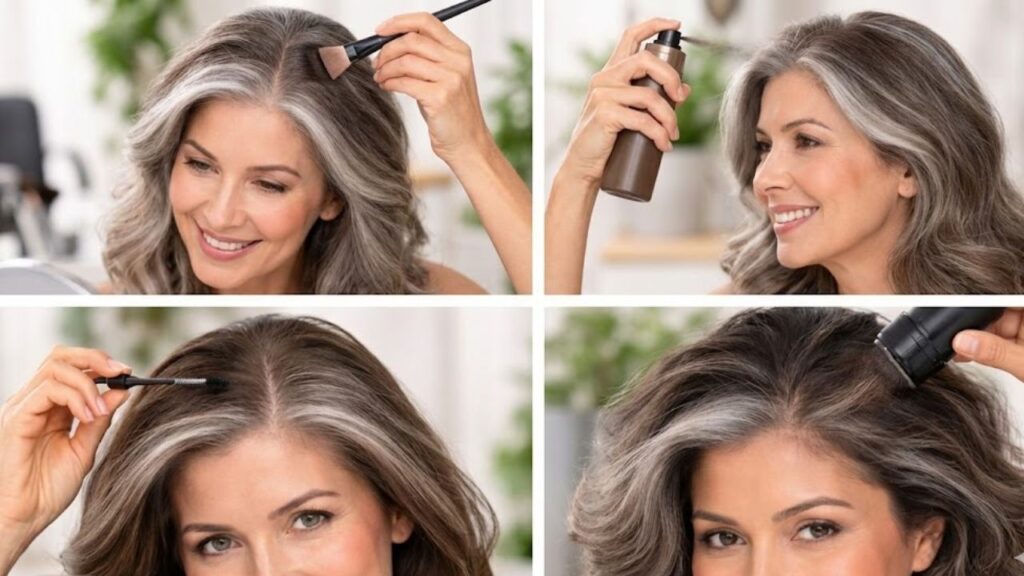
Taking care of your hair at home is straightforward. Use a purple or blue shampoo once a week to prevent silver tones from turning yellow. Apply a light oil or shine product to help coarse gray hairs stay smooth and shiny instead of frizzy. When you need a quick touch-up for an event you can use tinted root spray or powder on your part to blend everything seamlessly.
A Subtle but Powerful Shift in Confidence
This gentler method changes the way people think about their own hair. Rather than examining every gray hair closely the focus moves to how healthy and vibrant it looks overall. People start asking themselves if their hair appears full of life instead of worrying whether it makes them look too old. This simple shift in perspective eliminates much of the stress that gray hair often causes. Paris-based colorist Lila Moreau explains that her clients have different priorities now. They want to look refreshed and radiant like their best selves rather than requesting full gray coverage. She uses techniques like gray blending & glossing treatments along with strategic highlights around the face to achieve this effect. The goal is not to conceal signs of aging but to ensure that regrowth does not become the first thing people notice.
When people stop chasing the idea of zero gray, something shifts. They experiment again — softer fringe, lighter pieces around the face, or a cut that lifts the neckline. Friends rarely comment on the gray itself. Instead they say, You look rested, or, You look different, in a good way.”
This isn’t a rejection of color. It’s a farewell to panic touch-ups, hiding under hats, and the dread of visible regrowth. Some still use dye, just with more flexibility. Others lean into natural gray with a light gloss. Many land somewhere between. None of it has to be absolute.
The deeper change is about choice. When gray becomes a design element instead of a flaw, the focus moves from erasing age to shaping how it appears. Keeping your years while refining light, texture, shape, and shine isn’t about hiding. It’s about deciding how you want to be seen — and that quiet control is what truly shows.
Reframing Age, Hair, and Personal Control
This softer approach shifts how people view their own hair. Instead of scrutinizing every gray strand the attention turns to overall health and vibrancy. People begin wondering if their hair looks lively rather than worrying it ages them. This basic change in thinking removes much of the anxiety gray hair typically brings. Paris colorist Lila Moreau notes her clients now have different goals.
They want to appear refreshed and glowing like their best version instead of asking for complete gray coverage. She applies methods like gray blending and glossing treatments plus careful highlights near the face to create this look. The aim is not hiding age but making sure regrowth stays subtle. When people abandon the pursuit of zero gray something changes. They try new things again like softer bangs or lighter sections framing the face or cuts that lift the neckline. Friends seldom mention the gray itself.
They say things like “You look rested” or “You look different in a good way.” This is not about rejecting color. It means saying goodbye to emergency touch-ups and hiding under hats & dreading visible roots. Some still use dye but with more freedom. Others embrace natural gray with a light gloss. Many find a middle ground. Nothing needs to be all or nothing. The real shift involves choice. When gray becomes a style feature rather than a problem the focus moves from hiding age to controlling how it shows. Keeping your years while adjusting light and texture and shape & shine is not about concealment. It means deciding how you want others to see you and that quiet power is what truly matters.