In today’s fast-paced world, it’s easy to feel overwhelmed by stress, anxiety, and constant distractions. One of the most effective ways to combat this is through mindful breathing and yoga, both of which help calm the mind and body. Yoga offers a powerful combination of breath control (pranayama) and physical movement, which can enhance mental clarity and reduce stress. Below are ten yoga poses specifically designed to promote mindful breathing and inner calmness.
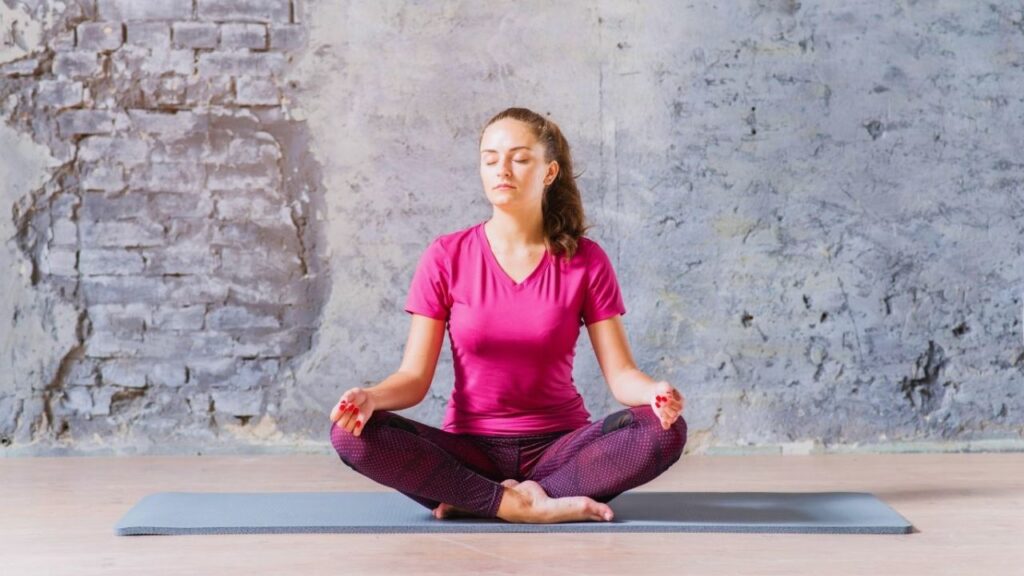
1. Sukhasana (Easy Pose)
# Sukhasana

Sukhasana is a basic sitting position that helps ground your body and calm your mind. You sit on the floor with your legs crossed while keeping your spine straight and your shoulders loose. Place your hands on your knees & close your eyes while breathing deeply and slowly. This position works well when you want to start your yoga routine or meditation practice.

Breath Focus: Inhale deeply for four counts, hold for two, and exhale for six counts. This pattern helps activate the parasympathetic nervous system, promoting calmness.
2. Adho Mukha Svanasana (Downward Dog)
This well-known pose stretches the entire body and relieves tension. Begin on all fours, lift your hips towards the ceiling, and straighten your legs. Press your heels down and extend your spine. Downward dog encourages deep breathing while elongating the body.
# Breath Focus
Take air in when you straighten your back and let air out when you sink deeper into the position. Try to breathe at a steady pace with an even rhythm so you can keep your balance and stay focused.
3. Bhujangasana (Cobra Pose)
Cobra pose opens up the chest and lungs, improving the flow of oxygen. Lie flat on your stomach, place your hands under your shoulders, and gently lift your chest off the ground. This gentle backbend improves lung capacity, which is key for mindful breathing.
Breath Focus: Inhale as you lift your chest, and exhale as you lower it. Maintain a smooth and controlled breath throughout.
4. Setu Bandhasana (Bridge Pose)
Bridge pose strengthens the core and relaxes the back. Lie on your back, bend your knees, and place your feet flat on the floor. Lift your hips towards the ceiling while keeping your arms by your sides. This pose opens up the chest and helps improve deep breathing.
Breath Focus: Breathe in while you raise your hips and open your chest. Breathe out while you gently bring your body back down to the starting position.
5. Viparita Karani (Legs-Up-The-Wall Pose)
This restorative pose is excellent for calming the mind and soothing anxiety. Lie on your back with your legs up against the wall and your arms extended on the floor. It’s an ideal pose for relieving stress and promoting relaxation.
Breath Focus: Deep breathing is essential here. Focus on slow, even inhales and exhales, allowing your body to relax completely into the floor.
6. Ujjayi Pranayama (Victory Breath)
Ujjayi breath is not a physical pose but it plays an important role in calming your mind. When you practice this breathing technique you breathe slowly and keep everything under control. You create a small tightening at the back of your throat which makes a sound similar to ocean waves. This special way of breathing helps you stay focused & aware during your yoga session.
Breath Focus: Inhale through your nose while gently constricting your throat, then exhale in the same manner. Keep the breath slow and steady.
7. Balasana (Child’s Pose)
Child’s pose is one of the most relaxing poses in yoga. Kneel on the floor, sit back on your heels, and extend your arms forward on the mat. Lower your forehead to the ground. This pose gently stretches the back and helps you focus on deep breathing.
Focus on your breathing by taking deep breaths that fill your abdomen. Let your body become completely relaxed as you breathe in and out. With every breath you take allow yourself to sink deeper into a state of calm & release any tension you might be holding.

8. Tadasana (Mountain Pose)
Tadasana is a standing pose that helps improve posture and balance while focusing on breath. Stand tall with your feet hip-width apart, arms at your sides, and palms facing forward. Imagine yourself as a mountain—firm, rooted, and peaceful.
Breath Focus: As you stand tall, inhale deeply, filling your lungs, and exhale completely, lengthening your spine with each breath.
9. Pranayama with Alternate Nostril Breathing (Nadi Shodhana)
This breathing exercise helps balance the left and right sides of the brain, promoting calm and focus. Sit in a comfortable position, and use your right thumb to close your right nostril. Inhale deeply through the left nostril, close it with your ring finger, and exhale through the right nostril. Continue alternating for several minutes.
# Breath Focus
Make sure every breath you take is slow & controlled. Pay attention to each one and breathe with purpose. When you practice breathing this way it helps empty your mind of distractions and makes your thinking sharper and more clear.
10. Savasana (Corpse Pose)
Savasana is the final relaxation pose that helps your body take in all the benefits from your practice. Lie down on your back & stretch your legs out straight. Place your arms next to your body with your palms turned upward. Close your eyes and let your breathing go back to normal on its own. This pose gives your muscles time to rest after working hard during yoga. Your heart rate slows down and your mind becomes calm. Stay in this position for at least five minutes to get the full effect. Some people like to stay longer if they have extra time. The room should be quiet and comfortable during this pose. You might want to cover yourself with a blanket since your body temperature can drop when you stop moving. Make sure you are warm enough before you settle in. Your body will feel heavy as you relax deeper into the floor. This is normal and means you are doing the pose correctly. Let go of any tension you notice in your shoulders or jaw. Allow your feet to fall open naturally to the sides. This final pose is just as important as the other poses you did earlier. It helps your nervous system reset and gives your body time to heal. Many people feel refreshed & peaceful after spending time in Savasana.
# Breath Focus
Breathe in a natural way without attempting to control how you breathe. Just watch your chest as it rises and falls while you release any tension you might be holding.
—
The practice is simple. Let your breathing happen on its own. Notice the movement of your chest going up & down. As you do this let any tightness in your body fade away. There is no need to force anything or make your breath deeper or slower. The goal is to pay attention to what is already happening. Your body knows how to breathe so trust that process. When you focus on your breath this way you create space for relaxation. Tension often builds up without us realizing it. By observing your natural breathing pattern you give yourself permission to soften and release that tension. This is not about achieving a perfect state. It is about being present with yourself as you are right now.
FAQ:
Q1: How does yoga help with breathing and calmness?
Yoga encourages deep, mindful breathing, which activates the parasympathetic nervous system, reducing stress and promoting calmness. Certain poses, combined with pranayama (breath control), allow for a deeper connection between mind and body, fostering relaxation and emotional balance.
Q2: Can yoga improve my mental clarity and focus?
Yes! The deep breathing and mindfulness cultivated through yoga enhance mental clarity by calming the mind, reducing distractions, and improving concentration. It helps shift your focus away from external stressors and towards inner peace.
Q3: How long should I hold each yoga pose for mindful breathing?
For most poses focused on mindful breathing, it’s best to hold them for 5-10 breaths, ensuring each inhale and exhale is deep and deliberate. In restorative poses like Savasana or Viparita Karani, you can hold them for longer to fully relax the body.
Q4: Can yoga help with anxiety and stress management?
Absolutely. Yoga, particularly when combined with mindful breathing, has been shown to reduce anxiety and stress levels. Regular practice helps regulate the nervous system, calming the body and mind. The emphasis on deep, conscious breathing is especially helpful in moments of anxiety.
Q5: Is it okay to practice these poses daily?
Yes, these poses can be practiced daily. In fact, regular yoga practice, especially those focusing on breath and calmness, can provide significant benefits over time, including improved mental health, increased relaxation, and better overall well-being.