Have you ever considered the ideal spot to dispose of a banana peel in your garden? You’re not alone in this thought. Many gardeners have carelessly discarded peels, hoping for a touch of magic. But what if there’s a specific location that can turn them into a potent nutrient source for your plants?
The Accidental Discovery
It all started with a lazy mistake. I threw a banana peel at the base of a rosebush, simply because the compost bin was too far away. Weeks later, that rosebush was thriving, while its neighbor, sans banana, looked unimpressed. Was this coincidence, or was there magic in the peel?
The Banana Peel Dilemma
You might believe that throwing peels around your garden is good for the environment. However they usually just lie on top of the soil without doing much. I have watched neighbors toss peels everywhere like they were celebrating something but their plants did not respond well and bugs showed up instead. So what is actually happening here? The problem is that whole peels take a long time to break down when they just sit on the surface. They need to be broken into smaller pieces or buried in the soil to decompose properly. When peels stay intact on top of the ground they can attract fruit flies and other unwanted insects. They also might develop mold before they ever turn into anything useful for your plants. If you want peels to benefit your garden you need to either chop them up into tiny pieces or add them to a compost bin where they can break down correctly. You could also bury them a few inches under the soil where microorganisms can work on them more effectively. Simply scattering them around and hoping for the best usually leads to disappointment and a messy garden bed.
The Day Our Sun Disappears: Are You Ready for the Longest Eclipse…
The Science Behind the Peel
Banana peels are rich in potassium and other nutrients, but plants can’t use them until they decompose. Lying exposed, peels decompose slowly and attract pests. But buried in the soil, they transform into plant nourishment.
Finding the Sweet Spot
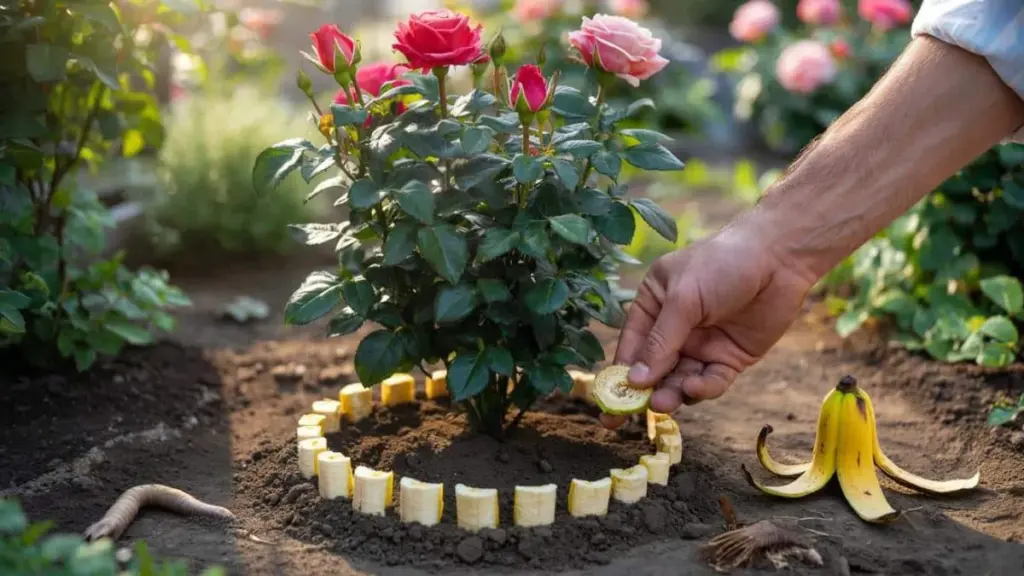
The trick is not to place peels right at the stem or just leave them sitting on top of the soil. You need to put them where the roots actually are. Picture a circle around your plant that lines up with the tips of the outer leaves. That spot is exactly where your peel belongs.
- Take a small trowel and make a slit in the soil.
- Fold or cut the peel and slip it in.
- Cover and press the soil lightly.
No more visible peels, no smell, no pests. Just nutrients ready to be absorbed.
Airbus’s Sky-High Feat: What Happens When Two Jets Meet Exactly?
Why It Works
Most gardeners toss peels on compost heaps or let them sit on the surface. But by “micro-composting” right where the plant needs it, you provide a steady nutrient supply. Roses, tomatoes, and flowering shrubs, in particular, thrive with this method.
A Simple Routine
We all have packed schedules and some days we just cannot get around to gardening. However if you make it a habit to bury peels in the correct location you will see healthier plants & brighter flowers over time.

Léa, a city gardener, shares, “Once I treated banana peels as slow-release food in the root zone, my plants flourished. It wasn’t instant, but by mid-season, the difference was clear.”
The Garden’s Response
Burying peels becomes more than waste disposal; it’s a nurturing act. Over time, you’ll notice patterns: which plants bloom, which grow stronger, and which stay green longer. This small act becomes an artful conversation with your garden.
When you eat your next banana keep this helpful tip in mind. You can easily turn those peels into something beneficial for your plants with just a little effort.
Related Posts
The Day Our Sun Disappears: Are You Ready for the Longest Eclipse…
Airbus’s Sky-High Feat: What Happens When Two Jets Meet Exactly?
Why a Nobel Physicist, Elon Musk, and Bill Gates See a Future…
Why August 2026 Will Feel Like Midnight at Noon: The Longest Solar…
Why a Simple Rosemary Trick Your Grandma Used Could Transform Your Home
# Using Banana Peels in Your Garden
Banana peels offer excellent benefits for home gardeners who want to improve their plants naturally. These kitchen scraps contain valuable nutrients that can enhance soil quality & promote healthy plant growth. Many gardeners simply throw away their banana peels without realizing their potential value. Instead of tossing them in the trash you can transform these peels into effective natural fertilizer for your garden beds and potted plants. The peels are rich in potassium and other essential minerals that plants need to thrive. You can use them in several different ways depending on your gardening style and preferences. One simple method involves cutting the peels into small pieces and burying them directly in the soil near your plants. As they break down they release nutrients gradually into the surrounding earth. This works especially well for roses and tomatoes which benefit from extra potassium. Another approach is to add banana peels to your compost pile where they decompose along with other organic materials. They break down relatively quickly & contribute to creating nutrient-rich compost for your entire garden. Some gardeners prefer making banana peel tea by soaking the peels in water for a few days. The resulting liquid can be used as a gentle fertilizer when watering plants. This method extracts the nutrients into an easy-to-apply form. You can also dry banana peels and grind them into a powder that stores well & can be sprinkled around plants whenever needed. This concentrated form provides a slow-release nutrient source. Using banana peels represents a practical example of sustainable gardening practices. It reduces kitchen waste while providing your plants with organic nutrition. This approach costs nothing and helps create a healthier garden ecosystem without relying on synthetic chemicals.