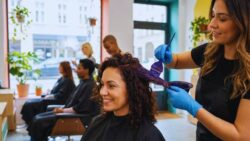
It’s usually a quiet moment when the frustration shows up. The lunch rush has passed, the salon feels calmer, and she’s watching herself in the mirror. She twists the ends of her short hair between her fingers. It’s clean. It’s shiny. And yet, it falls flat against her cheeks, refusing to hold its shape. The stylist lifts a section and lets it drop. It collapses instantly. They both smile, but the disappointment is familiar.
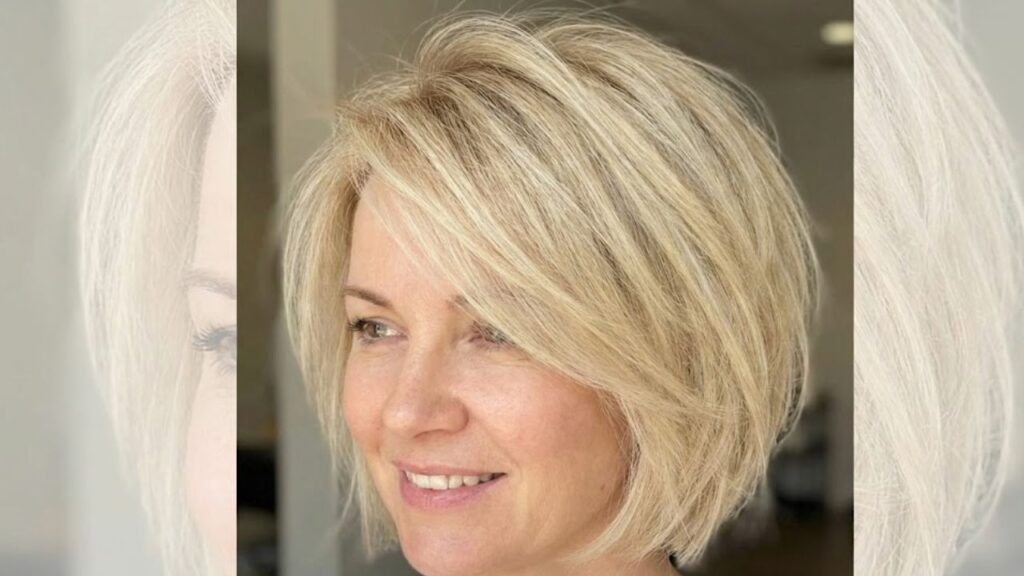
She scrolls through her phone and shows a photo of a cropped style with bounce and movement — the kind of fullness that seems effortless. She explains, again, that she doesn’t want more hair. She just wants her hair to look thicker. The stylist nods, pauses, and suggests a small but deliberate change. A few careful cuts later, something shifts. The hair lifts. It moves. It looks alive.

Nothing magical happened. The amount of hair didn’t change. The haircut did.

Why Fine Hair Loses Shape So Easily
Fine hair behaves differently from coarse or dense hair. Each strand is lightweight, smooth, and quick to lie flat. When the cut is wrong, fine hair clings to the scalp, especially around the crown and jawline. The result is that familiar “helmet” look — flat roots, no movement, and a shape that collapses within hours.
With short hair, placement matters more than length. A blunt cut that lands at the wrong point can make fine hair look thinner, not fuller. The difference comes from where weight is removed, where structure is added, and how the cut allows air and space between strands.
On a slow afternoon in London, stylist Maya R. demonstrated this perfectly. Her client arrived with an overgrown long bob that felt heavy and lifeless. The hair wasn’t damaged. It was simply very fine.
Maya suggested a bixie — a blend of bob and pixie. She shortened the back, kept softness around the face, and lifted the crown with light layering. Fifteen minutes later, the hair looked fuller, lighter, and intentional. The client touched it, surprised, and asked, “Wait… that’s all my hair?”
That reaction is exactly what the right cut can do.
What Actually Creates Volume in Fine Hair
Fine hair struggles with two main issues: misplaced weight and blunt lines. When too much bulk sits at the ends, gravity pulls everything downward. Roots flatten, and the overall shape loses lift.
Volume-focused short haircuts work by redistributing weight. Bulk is removed where it drags the hair down, and structure is added where lift is needed. Soft layers, subtle graduation, and slightly uneven edges stop strands from sticking together. The hair doesn’t become thicker — it simply behaves as if it is.
The Short Haircuts That Make Fine Hair Look Fuller
The Bixie Haircut
The bixie combines the softness of a bob with the lift of a pixie. It keeps gentle length around the face while shaping the back and crown closer to the head. This contrast instantly adds dimension.
Light layering at the crown prevents hair from lying in one flat sheet. With a small amount of texturizing cream or mousse, strands separate naturally and reflect light, creating the illusion of density. It also grows out well, which makes it practical for people who don’t visit the salon often.
The Modern French Bob
This is not a heavy, razor-sharp bob. The modern French bob is softened and slightly broken, usually sitting between the lips and the jaw. The ends are diffused, and the internal layers are subtle and invisible.
On low-effort days, it tucks neatly behind the ears. With a quick rough-dry, it delivers a relaxed, effortless shape. For many people with fine hair, this is the first style where flat roots stop being a daily struggle.
The Soft Layered Pixie
This pixie is flexible, not severe. It features tapered sides and back for a clean outline, with extra length on top for movement.
Fine hair benefits because there’s less weight pulling everything downward. A small amount of mousse at the roots and a brief blow-dry is often enough to create lift. It’s especially freeing for those tired of longer styles that never quite come to life.
The Stacked Nape Bob
The stacked bob is graduated at the back with longer pieces angled toward the chin. From the side, it forms a soft diagonal. From the back, stacked layers create a natural curve.
This built-in structure lifts hair at the crown and nape, keeping the shape full throughout the day. Worn straight, it looks polished. With soft waves, it can look like twice the hair.
Important Things to Know About Fine Hair and Short Cuts
For ultra-fine hair, soft layering works better than razor-thin ends. Ask for scissor work with gentle texturizing rather than aggressive thinning.
Lightweight products matter. A small amount of mousse at the roots, texturizing spray through mid-lengths, and dry shampoo for day two are usually enough. Heavy oils and thick creams near the scalp often flatten volume.
Short styles need regular maintenance. Bobs typically need reshaping every 6–8 weeks. Pixies and bixies usually need attention every 4–6 weeks to prevent the shape from collapsing.
How to Style Short Fine Hair So Volume Lasts
The haircut does most of the work, but drying technique finishes it. Fine hair needs lift while it’s still damp. Once it dries flat, volume is harder to revive.
Rough-dry hair upside down until it’s about 80 percent dry, lifting at the crown with your fingers. Once upright, use a round brush only where needed. A golf-ball-sized amount of lightweight mousse at the roots can make a noticeable difference.
Real life isn’t always polished. One morning in a shared bathroom, a woman with a French bob had only minutes to get ready. She dampened the front, lifted the roots with her fingers, and set them with warm air. The back stayed imperfect, but the style looked intentional. Practical styling often looks better than perfection.
The most common mistake with fine hair is using too much product. More product usually means heavier roots, not more volume.
Helpful habits include applying dry shampoo at night to absorb oil before it builds up, flipping your part before bed to encourage lift, and blotting hair gently with a microfiber towel or cotton T-shirt instead of rubbing.
Living Comfortably With Short Fine Hair
Choosing short hair with fine texture is often more than a style choice. It can feel like letting go of years spent trying to make hair behave like something it isn’t.
On an evening train ride, a woman in her forties ran her fingers through her stacked bob and said quietly, “I stopped waiting for my hair to be thicker.” That moment captured what no product ever could.
Short hair on fine strands reveals the neck, jawline, and cheekbones. Some days the fringe won’t cooperate. Some mornings you air-dry and accept softness. Other days you refine every bend. Both are part of the experience.
Between the bixie, French bob, soft pixie, and stacked bob, most people eventually find a shape that works for them. From there, it’s just fine-tuning.
The real shift happens when the question changes from “How do I hide fine hair?” to “How do I let this texture shine?” On the page, it sounds subtle. In the mirror, it changes everything.
 Natural Home Treatments That Strengthen Hair Roots and Reduce Hair Fall Over Time Naturally