
The first smell hits you before you even spot it. A faint, stale, almost sweet odor that clings to curtains and towels. You pull the wardrobe a few centimeters away from the wall and there it is: that grey-green, slightly furry stain that wasn’t there last month. The paint bubbles a little under your fingers. The plaster feels cold and strangely soft.
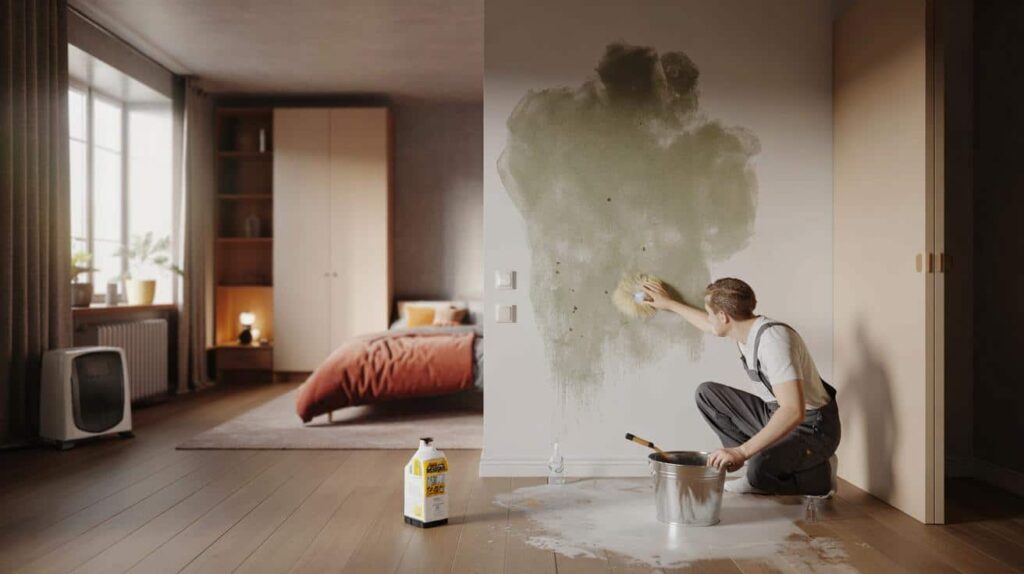
You grab a sponge, think of bleach, and your throat is already itching at the idea.
There must be another way.
No, you don’t need bleach: what pros really do with damp walls
Ask a painter who actually spends their days in people’s homes, and they’ll tell you straight: **bleach is a quick mask, not a solution**. It whitens the stain, kills some surface mold, irritates your lungs, and often makes the paint peel faster. The damp comes back quietly from behind, like a stain that’s learned to walk.
 How bananas can stay fresh and yellow for up to two weeks when stored with one simple household item
Professional decorators and painters usually start somewhere else, with their hands flat on the wall. They feel the cold, the soggy patch, the hardness of the plaster. They listen to how the wall sounds when they tap on it. Hollow? Crunchy? Dull? That’s their real “test kit”.
Take Laurent, 43, a painter in Lyon who has seen every sort of damaged wall you can imagine. He tells the same story again and again to his clients. “They call me for mold,” he laughs, “but the real issue is nearly always water that has nowhere to go.” A bathroom with no real extraction. A bedroom where a bed is pushed tight against an outside wall. A kitchen with a gas hob and windows that never open in winter.
One winter, he worked in a tiny studio where the tenant slept against a north-facing concrete wall. The paint had gone black behind the headboard. No leak, no flooding, just breath, steam from cooking, and cold exterior. The owner had scrubbed with bleach three times. The stains only came back bolder.
What the pros know is simple: damp is physics before it’s a cleaning problem. Warm air carries moisture. When this air hits a cold surface, the water condenses and settles inside the wall like a secret. If the wall can’t “breathe” or dry out on the room side, that damp lingers. Add dust, a little cellulose from wallpaper or plasterboard, low light, and you’ve created a spa for mold.
Bleach, ammonia, miracle sprays… they all work on what you see on the surface. The real job is always two steps: **stop the moisture source** and then rebuild a breathable, stable surface. That’s why painter-approved methods feel slower. They’re less about hero products, more about small, stubborn habits that change how your walls live.
The painter-approved method: step-by-step, without bleach or ammonia
Here’s the method painters quietly repeat on job after job, the one that actually stops damp from coming back. First, dry, then treat, then protect. No cheating on the order.
Start by airing the room properly for 10–15 minutes, even if it’s cold outside. Create a draft. Then gently scrape off anything loose: blistered paint, crumbly plaster, flaking wallpaper. Use a simple mask so you’re not breathing the dust. When the surface looks stable, dab it with absorbent paper. If it stays soaked, you still have an active problem behind the wall: leak, rising damp, broken seal. Pause there and investigate, or call someone.
If the paper only comes out a bit grey and damp, you’re in the “normal” condensation zone. This is where the method kicks in.
Next step: clean, but not like a disinfectant ad. Painters often go for a bucket of warm water with a little black soap or mild detergent, and sometimes white vinegar diluted at least 50/50. No eye-stinging fumes, no corrosive splash marks on your clothes.

Gently scrub the stained zone with a soft brush or sponge, changing the water when it goes too dark. Rinse lightly with clear water and let the wall dry as much as possible. Yes, real drying. Sometimes a full day with the window ajar and the heating on low, or a fan aimed at the spot. Let’s be honest: nobody really does this every single day. Yet this waiting time is where half the battle is won.
Once the wall is dry to the touch and no longer cold like a fridge, pros bring out their secret weapons: not chemicals, but breathable layers. They often apply an anti-mold primer based on potassium salts or acrylic resins, not chlorine. It penetrates the surface and slows future growth. Over that, they choose paints and coatings marked as “micro-porous” or “breathable”, often used on facades or bathrooms.
“People beg me for a product that ‘kills everything forever’,” Laurent says. “But what really works is air, time, and a paint that lets the wall talk to the room.”
Then come the everyday shields, which sound almost too simple:
- Leave 5–10 cm between furniture and outside walls.
- Open windows for 5–10 minutes after showers and cooking.
- Use a mechanical extractor or at least a small fan in bathrooms.
- Wipe early spots of condensation before they soak in.
- Prefer lime-based or breathable paints in small, cold rooms.
*It feels basic, but this is exactly what most professionals will quietly charge you for, plus their time and experience.*
Living with your walls differently
Once you’ve seen how quickly a wall can suffocate behind a wardrobe or under glossy plastic paint, you never quite look at your home the same way again. You start to notice the little things: the mist that still hangs in the bathroom mirror 20 minutes after a shower, the smell that appears when you come back from a weekend away, that icy stripe on the wall behind the curtain.
This painter-approved method is less about the magic product under the sink and more about a quiet pact with your house. Less sealing, more breathing. Less aggressiveness, more regular attention. Damp rarely arrives out of nowhere. It leaves clues, small ones, that only feel obvious once someone has pointed them out.
You might try moving a bed 10 cm away from a wall and, three months later, realize the stain has stopped growing. You might choose a matte, micro-porous paint over a shiny “washable” one and notice the window corners stay cleaner through winter. Tiny choices, not very glamorous, that change how your walls age.
The real shift is this: you stop fighting your home as if it were the enemy, and start helping it do what it wants to do anyway. Breathe out the damp, bring in the dry. Let air and time do half the work, and reserve products for what they do best: finishing, not faking.
 Evening Yoga Routine Featuring 4 Gentle Poses That Release Tight Hips and Melt Lower Body Tension
| Key point | Detail | Value for the reader |
|---|---|---|
| Dry before treating | Ventilate, scrape loose material, and let the wall fully dry before any product | Prevents hidden damp and stops stains from reappearing quickly |
| Use gentle cleaners | Warm water, mild soap, diluted vinegar instead of bleach or ammonia | Protects health, avoids damaging paint and keeps the surface stable |
| Choose breathable finishes | Anti-mold primer + micro-porous or lime-based paints | Lets moisture escape, reducing future mold and peeling |
FAQ:
- Does vinegar really work against mold on walls?Vinegar doesn’t fix deep structural damp, but it helps clean and slow superficial mold on painted walls. Always dilute it and ventilate well while using it.
- How do I know if my damp is from condensation or a leak?Condensation tends to appear on cold external walls, corners, and around windows, often in winter. A leak is more localised, can appear suddenly, and the area may stay wet even in warm, dry weather.
- Can I just paint over mold with special “anti-mold” paint?Painting straight over active mold is almost always a bad idea. You need to clean, dry, and stabilise the surface first, then use primer, then paint.
- Is a dehumidifier enough to solve damp problems?A dehumidifier helps a lot with condensation and high humidity, especially in small rooms. It doesn’t repair leaks, rising damp, or insulation issues but supports the painter’s method.
- How long should I wait before repainting a damp wall?Once cleaned, a wall should be completely dry, which can take from 24 hours to several days depending on the damage. Painters often wait until the wall feels neither cold nor clammy to the touch.
