As winter stretches on and we spend longer inside, 2026’s interior trends quietly shift away from fast, flashy decor and towards comfort that actually lasts. Less “Instagram wall”, more long-term sanctuary. Here’s how design insiders expect our living rooms, bedrooms and dining spaces to evolve over the next few years – and which ideas are worth betting on if you’re about to move furniture, paint walls or hit the sales.
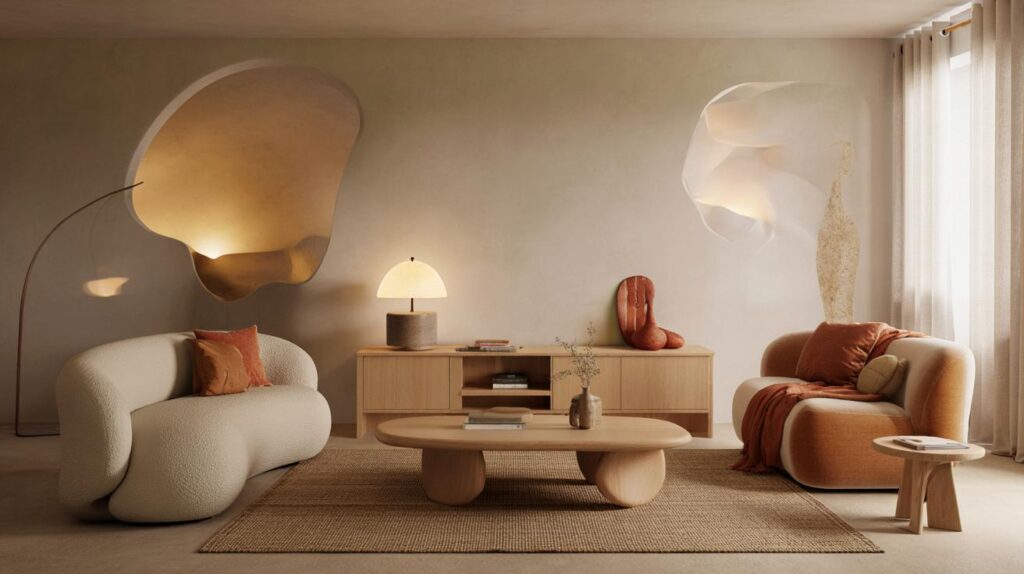
1. Organic minimalism replaces harsh, empty spaces
The cold, gallery-style minimalist look is fading. In its place comes organic minimalism: still simple, but far warmer and softer.

This style keeps only what you need, yet avoids sterility. Straight lines give way to curves. You’ll see bean-shaped sofas, round-edged armchairs, plump ottomans and coffee tables with soft, oval silhouettes instead of sharp rectangles.
 The baking tray in the oven will shine like new: a clever trick without expensive chemicals
The goal is not to strip everything away. It’s to remove visual noise so key pieces stand out and the room feels easy to live in.
How to bring organic minimalism into a busy home
- Clear shelves of tiny trinkets and keep a handful of meaningful objects.
- Swap boxy furniture for at least one curved item: a lamp, a side table or a chair.
- Let windows breathe by removing heavy ornaments from window sills.
- Choose fewer, larger decor pieces rather than many small ones.
This trend lasts because it sits between two extremes: not cluttered and chaotic, but not cold or show-home perfect either. It works in small flats and big houses alike.
2. Raw materials and “quiet texture” take centre stage
Plastic-heavy furniture is losing appeal. In 2026, the focus is on raw, tactile materials that age well: solid wood, stone, linen, wool, clay and iron.
These surfaces look richer in natural light, and they handle wear better than thin laminates. A second-hand oak table, a slate-topped sideboard or handcrafted ceramic lamps bring character without screaming for attention.
Texture is becoming the new pattern: linen, bouclé, jute and clay add depth without relying on loud prints.
Warm earthy tones instead of cold greys
Alongside raw materials, colour palettes are warming up. The era of hard greys and blinding white walls is fading. Designers are backing terracotta, clay, sand, caramel and rust as the new neutrals.
- Terracotta cushions or throws instantly cosy up a neutral sofa.
- Jute, sisal or wool rugs soften tiled or laminate floors.
- Rust, ochre or burnt orange accents work well on lampshades and vases.
- Off-white with a slightly beige or peach undertone flatters evening lighting.
These tones pair naturally with plants, wood and black metal. They also stay timeless longer than very specific “colour of the year” shades, which come and go quickly.
3. The slow decor mindset replaces impulse buying
Beyond looks, there’s a clear shift in attitude. Instead of redoing entire rooms every year, more people are moving towards “slow decor”. That means curating pieces over time and accepting that a room can stay unfinished for a while.
Slow decor treats the home like a long-term project, not a weekend challenge solved with a single online order.
This approach encourages buying fewer items, but better made ones: solid wood chairs, real wool blankets, handcrafted ceramics. Pre-loved pieces and vintage markets play a bigger role, both for budget reasons and environmental concerns.
What slow decor looks like in real life
Imagine a living room where the sofa is new but the coffee table is an old family piece, the sideboard comes from a charity shop, and the art is slowly collected prints, photos and small paintings instead of one big, generic canvas bought in a rush. Nothing matches perfectly, but everything feels intentional.
4. Visual calm: a gentle backlash against maximalism
Maximalist interiors – walls filled with frames, surfaces lined with ornaments, clashing prints everywhere – have been all over social media. In 2026, that look starts to feel tiring in everyday life.
Designers are seeing more requests for rooms that feel restful first, photogenic second. That means fewer visual distractions and refreshingly empty patches of wall.
Visual quiet reduces mental load: when your eyes rest, your brain rests a little too.

Maximalist details likely to age fast
- Complex geometric wallpapers that shrink the room and grab all the attention.
- Neon or ultra-bright colours that clash with natural materials.
- Several types of bold pattern in the same small space.
- Overloaded gallery walls that creep across every vertical surface.
This doesn’t mean everything must look bland. It means choosing where the eye should land first – a sofa, a piece of art, a view – and letting that lead, instead of competing elements fighting for attention.
5. Soft geometry: curves, arches and irregular shapes
One of the strongest visual trends for 2026 is the move towards soft geometry. Straight lines are softened with gentle curves and irregular outlines.
| Element | 2020-style version | 2026-style version |
|---|---|---|
| Mirror | Perfect circle or rectangle | Free-form, blob or arch shape |
| Coffee table | Sharp-edged rectangle | Oval, kidney or soft triangular shape |
| Sofa | Boxy, squared arms | Rounded arms and wrapped cushions |
These curves echo forms found in nature, which is one reason they feel so relaxing. Even a single arched floor lamp or rounded mirror can shift the mood of a room.
6. Layered lighting instead of one harsh ceiling lamp
Lighting is getting more attention as people realise how much it shapes mood. The single bright ceiling light is giving way to layered lighting: several softer sources used at once.
In 2026 homes, light is treated like furniture: it’s planned, layered and adjusted, not just switched on.
Warm white bulbs, dimmers and lamps at different heights help living rooms transition from work zone to evening retreat. Wall lights, table lamps and floor lamps create pockets of light rather than blasting the whole space at one level.
This matters particularly with the earthy colour palettes of 2026. Terracotta and rust tones look rich under warm, low light, but can seem dull under very cold, blue light.
7. Hybrid rooms designed for real life
Since working from home became normal for many, rooms rarely have a single purpose. The long-term response is smarter hybrid spaces that accommodate both focus and rest without looking like offices.
- Foldaway or wall-mounted desks in living rooms, closed after hours.
- Slim storage that hides paperwork and tech when the workday ends.
- Room dividers made of shelves or curtains instead of solid partitions.
- Small reading corners with a chair, lamp and side table for non-screen time.
The durable part of this trend lies in flexibility. Furniture is chosen not just for style, but for how easily a room can switch roles across the day.
What “visual clutter” really means – and how to test for it
Many people sense their home feels busy but can’t pinpoint why. Designers often talk about “visual clutter”. That doesn’t always mean too many objects; sometimes it’s about competition.
A quick test: stand at your doorway and look into the room for five seconds. If your gaze jumps between lots of small things – cushions, prints, gadgets, plants – the space may be visually noisy. If your eyes rest on one or two main elements, the room is likely balanced.
Reducing visual clutter doesn’t require throwing everything away. Group small items on a single tray, keep some surfaces clear, and let one area be the star – a bookcase, a fireplace, a dining table or a window.
Practical scenarios if you’re updating on a budget
For a rented flat where you can’t paint, permanent changes are limited. Even so, several 2026 trends are still within reach:
- Swap bright, busy cushion covers for plain, textured ones in clay, sand or olive.
- Add one curved item, such as an arched floor lamp or a round side table.
- Choose a natural fibre rug to anchor the seating area.
- Reduce fridge magnets, key rails and random hooks near the entrance to calm that first impression.
For a house you own and plan to keep, investing in structure makes sense: wooden flooring rather than vinyl, a neutral warm paint across several rooms, built-in storage to hide clutter and a long, solid dining table that can handle years of use.
Taken together, these seven long-term trends share a common thread: they favour comfort, durability and visual peace over short-lived showpieces. If your home currently feels hectic, even one or two changes – a calmer palette, fewer objects, softer shapes – can shift the whole atmosphere and make next winter indoors feel very different.