Many people carry on with packed schedules, group chats and meetings, yet still go to bed with a dull sense of emptiness. That feeling is rarely about how many people are around you, and far more about whether you feel truly seen and understood.
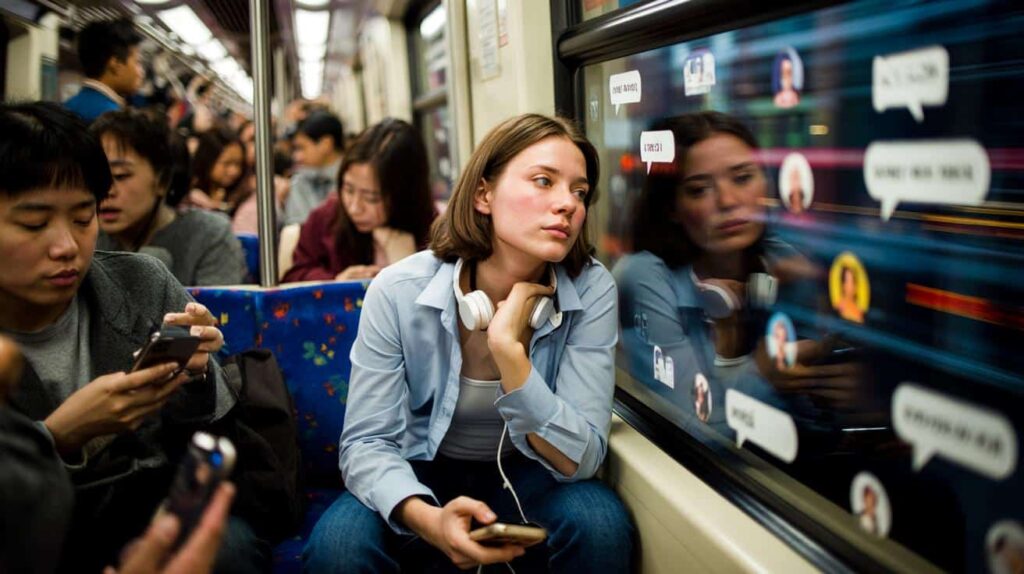
Lonely in a crowd: why being alone isn’t the real issue
We often picture loneliness as an older person in an empty flat or someone eating alone in a café. Reality is more nuanced. You can feel desperately lonely in a busy office, in a shared flat, or even in a long-term relationship.

Loneliness is less about physical isolation and more about the gap between the connection you want and the connection you feel.

Spending time alone can actually be healthy. Quiet moments help you focus, regulate your emotions and recharge mentally. Voluntary solitude lets you choose when to socialise and when to withdraw, without losing your sense of belonging.
Loneliness, by contrast, feels imposed. You might crave stronger relationships yet still feel disconnected, rejected or left out. That emotional disconnect can sit underneath a major life change, such as a breakup, moving city or bereavement, but it can also stem from low self-esteem, social anxiety or depression.
Four subtle signs you’re lonelier than you think
For some people, loneliness shows up clearly: long evenings alone, very few phone calls, no one to contact in an emergency. For others, it hides behind a social life that looks fine on paper. These quieter signals can be easy to miss.
1. You scroll social media to feel “close” to people
You open an app for “five minutes” and, suddenly, half an hour has gone. You tell yourself you’re keeping up with friends’ lives. Yet you realise you cannot remember the last time you actually saw some of them in person.
Digital connection can mask emotional distance: you know what people are doing, but not how they truly are.
Signs this is tipping into loneliness:
- You check who has viewed your stories, looking for reassurance.
- You feel a pang of hurt when you see friends out together without you.
- You rarely move from watching to reaching out directly.
The device gives you a sense of proximity, but your underlying need for real, mutual contact remains unmet.
2. Your daily conversations feel thin and performative
On paper, you talk to people all day: colleagues, neighbours, the barista who knows your order. Still, each conversation feels like a script. You talk about the weather, deadlines, TV shows, but nothing that actually matters to you.
Afterwards, you can feel oddly hollow, as if you were present but not truly there. You might notice:
- You rarely share how you really feel, even when asked “How are you?”
- You keep the spotlight on others to avoid talking about yourself.
- You leave social situations feeling more drained than nourished.
When most of your interactions stay at surface level, your social calendar may be full while your emotional life feels painfully empty.
3. You constantly wonder whether people actually like you
You go to a dinner or a birthday party and, at first, it seems to go well. You laugh, you chat, you get home. Then your brain starts replaying every moment.
Did you talk too much? Were your jokes annoying? Did that person look bored when you spoke? A harmless comment can spiral into a worry that you are merely tolerated, not genuinely wanted.
This mental replay often links to loneliness in two ways:
| Thought pattern | Possible effect |
|---|---|
| “They’re being polite, not sincere.” | You downplay any warmth or interest others show. |
| “I’m probably not their first choice.” | You feel like an outsider in your own friendship group. |
| “They’ll forget about me soon.” | You stop investing in relationships, expecting rejection. |
Over time, this self-questioning can push you to pull back, which deepens the very isolation you fear.
4. You don’t know where you truly “belong”
Ask yourself a simple question: “Where do I feel completely at ease, like I fit?” If no clear image comes to mind, that can be a quiet sign of emotional loneliness.

You might have different groups – work colleagues, gym acquaintances, family – but nowhere that feels like a safe base. In conversations, you adapt your personality to match the room. You leave gatherings wondering who the “real you” actually is.
This lack of a psychological home can be just as painful as physical isolation. Humans are wired for a sense of belonging, not just casual contact.
Why loneliness hurts both mind and body
Loneliness is not simply a mood. Research links chronic emotional isolation to higher levels of stress hormones, poor sleep, anxiety and depressive symptoms. Over the long term, it can nudge people toward unhealthy coping mechanisms such as excessive drinking, overeating or constant work.
When you feel disconnected, your nervous system tends to stay on alert, as if something is fundamentally unsafe.
That state can make social situations even harder. You may misread neutral expressions as rejection or stay silent from fear of saying the wrong thing, which keeps you stuck in the same loop.
Turning awareness into small, practical shifts
Recognising these subtle signs is not a verdict on your character. It is a starting point for change. The goal is rarely to add hundreds of new contacts, but to build a few deeper, more honest connections.
From scrolling to speaking
One useful shift is moving from passive to active connection. If you find yourself endlessly scrolling, set a small challenge:
- Send a voice note to one person you miss.
- Reply to a story with a genuine question instead of a quick emoji.
- Arrange a short call or coffee rather than another long text thread.
These are modest steps, yet they send your brain a different message: people can be approached, not just observed.
Building depth into everyday conversations
Emotional intimacy does not only happen in dramatic late-night talks. It often starts with slightly more honest answers to small questions. When someone asks how you are, you might risk saying, “Honestly, I’ve felt a bit disconnected lately,” instead of the automatic “Fine.”
Not everyone will respond with warmth, but some will. Those people are worth paying attention to. Over time, that openness makes relationships feel less fragile and more real.
When loneliness overlaps with other struggles
For some, loneliness is a passing phase linked to a specific change: a move to a new city, the end of a course, a shift in working hours. In these cases, joining local groups, volunteering or reconnecting with old contacts can ease the gap.
For others, loneliness sits alongside depression, social anxiety or long-term low self-worth. If you notice persistent sadness, loss of interest in usual activities, sleep problems or thoughts that life is pointless, those signs suggest more than loneliness alone. Talking to a GP, therapist or mental health professional can help separate the threads and offer targeted support.
Feeling lonely does not mean you are unlikeable; it often means your current environment and habits are not matching your emotional needs.
Imagining concrete situations can help clarify your own picture. Think about who you would message first after a major piece of news, good or bad. Consider who you trust enough to show up unannounced, in tears or in celebration. If those answers are blank or unclear, that does not make you broken, but it does highlight where to direct your energy.
Small experiments – a weekly hobby group, a regular walk with a neighbour, a standing phone call with a sibling – can slowly reset your sense of belonging. None of these erase loneliness overnight, yet together they create more chances for genuine connection to take root, and for those subtle signs of isolation to soften over time.