We love recipes you can shove in the oven and forget about, but the tray rarely forgives us. Instead, it quietly gathers fat, caramelised sauces and stuck-on potatoes until it looks more brown than silver. Before you reach for harsh oven cleaner, there’s a surprisingly simple way to bring the tray back to life — and it starts with a raw potato.
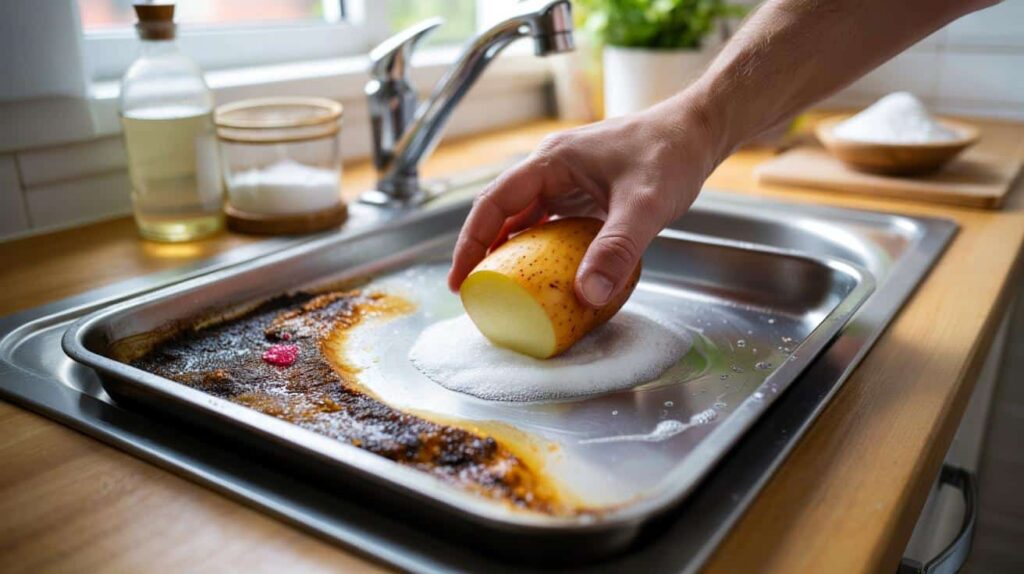
Why your oven tray looks filthy so quickly
Roasting at high temperatures changes how fats behave. Oil splashes, cheese bubbles over, and meat juices reduce into sticky patches that cling to the metal.

Non-stick coatings help for a while, yet repeated use at 200°C and above slowly wears them down. At that point, every breadcrumb and drop of sauce seems to weld itself to the tray.

Even a tray that looks “clean enough” can hold a thin, greasy film that smokes, smells and affects the taste of fresh food.
Commercial oven cleaners can strip this away, but many of them contain powerful alkalis and solvents. They work, but they also sting the nose, irritate skin and sometimes discolour trays. That’s why more home cooks are quietly going back to low-cost, low-tox tricks.
The potato trick: how a raw spud becomes a cleaning tool
The star of this method is something almost every kitchen has: an uncooked potato. It sounds like a hack from your nan, yet it makes chemical sense.
What makes the potato work
Raw potatoes contain starch and mild organic acids. Together, they help loosen fat and soften browned-on food. The surface of a cut potato also has a gentle abrasiveness, especially when combined with salt.
A halved potato works like a soft scrub pad: it absorbs grease, shifts residue and is safe on most metal trays.
Step-by-step: cleaning a dirty baking tray with a potato
The method is straightforward and needs only water, a potato, salt and washing-up liquid.
- Bring a kettle of water to the boil.
- Place the dirty tray in the sink or on a heat-resistant surface.
- Carefully pour the boiling water over the tray to cover the dirtiest areas.
- Leave it for around five minutes so burnt-on bits soften.
- Pour away most of the water, leaving the tray damp.
- Cut a raw potato in half.
- Optional: sprinkle a tablespoon of table salt across the surface.
- Use the cut side of the potato like a sponge, rubbing over the greasy patches.
- Rinse under warm running water.
- Finish with a standard wash using a sponge and washing-up liquid.
The salt acts like very fine sandpaper, while the potato provides moisture, starch and a bit of grip. Many people find that baked-on rings from roast chicken or chips come away with much less scrubbing than usual.
Other low-cost household tricks that help trays shine
A potato is not your only ally. A few basic cupboard staples can go a long way when rotated or combined sensibly.
| Product | How to use it on trays | Best for |
|---|---|---|
| White vinegar | Mix 1:1 with water, pour on the tray and leave to soak before scrubbing. | Grease film, light brown stains, deodorising. |
| Dishwasher tablet | Place in a tray filled with hot water; let it dissolve, then agitate and rinse. | Heavily soiled trays with layers of baked-on residue. |
| Cornflour (cornstarch) | Sprinkle over a damp tray and rub gently with a wet sponge. | Fine surface stains, dull patches, light polishing. |
Alternating gentle methods often cleans better over time than one brutal session with harsh chemicals.
Using vinegar without filling the kitchen with fumes
A 1:1 mixture of white vinegar and water is strong enough for mild oven grime. Pour it on, leave it for at least 15 minutes, then scrub with a non-scratch pad.
The smell can be sharp, so opening a window or turning on the extractor fan helps. Once rinsed, the odour fades quickly and the tray usually looks noticeably brighter.
When a dishwasher tablet makes sense
For trays with years of neglect, the potato alone may not win. This is where a dishwasher tablet earns its keep.

Fill the tray with very hot water, drop in a tablet and wait until it fully dissolves. Swirl the water around and let it sit for another 10–20 minutes. The built-in enzymes and alkalis start to break down burnt layers, so they come away with far less force from your side.
Small habits that prevent heavy scrubbing later
Cleaning gets easier when you stay slightly ahead of the grime. That does not mean polishing the oven every night, but a few tweaks keep trays from crossing into “beyond help” territory.
- Line trays with baking parchment when roasting sticky foods or cheese-heavy dishes.
- Wipe or rinse the tray while it is still just warm, not stone cold.
- Avoid cutting food directly on the tray, which scratches the surface and traps grease.
- Rotate between two trays so one can soak properly while the other is in use.
These small actions cut down the number of deep cleans you need across the year.
When natural methods might not be enough
There are limits. Trays with deep rust, peeling non-stick coating or warped metal may never look new again, potato or not. In those cases, aggressive scrubbing can even make things worse, releasing tiny flakes of coating into future food.
If a tray sheds its coating or smells of burnt metal every time it heats, it is probably time to replace it, not rescue it.
There is also a safety angle. People with sensitive skin should still wear gloves when using vinegar or dishwasher tablets, even though these are milder than some commercial sprays.
Why so many people are moving away from heavy chemicals
Part of the appeal of the potato trick is psychological. Scrubbing with a raw vegetable feels less intimidating than handling products with hazard symbols on the label.
Families with young children or pets often prefer options that rinse away cleanly, without leaving strong odours or residues. Using food-based cleaners on cookware also reassures those who worry about chemical traces around items that hold meals.
There is an economic angle too. A bag of potatoes, a bottle of vinegar and some salt cost less than many specialist oven-cleaning kits, and they have dozens of other uses in the home.
Practical scenarios where the potato method shines
Imagine a Sunday roast with chicken, root vegetables and a honey glaze. Sweet, sticky sauces are notorious for forming hard lacquer on trays. Leaving that mess until morning turns a quick rinse into a full-on battle.
In that situation, boiling a kettle while you clear the table and giving the tray a five-minute soak, followed by a rub with a halved potato and salt, can cut your cleaning time in half. The sugar crust softens early, before it hardens into something resembling varnish.
For people living in small flats with limited ventilation, this method also trims down strong odours and airborne irritants. You still get a shining tray, just with fewer eye-watering fumes and less need to scrub until your wrists ache.
Used regularly, the potato trick and its supporting cast of vinegar, salt and cornflour can keep your baking trays looking close to new. They will never stay pristine forever, but they do not need to become a permanent exhibit of every meal you have cooked since last Christmas either.