
The bananas were perfect when you bought them. Sunny yellow, firm, no brown freckles in sight. Two days later, they’re slumped in the fruit bowl like they’ve lived three lives and given up on the fourth. You glance at them on a Wednesday night and think, “I swear I just bought these.” Then you feel that tiny sting of guilt as you toss yet another soft, spotty one into the bin. Food wasted, money wasted, small frustration added to the week.
And yet, some people quietly keep their bananas fresh and bright for nearly two weeks.
With one thing almost everyone has at home already.
Why your bananas seem to age overnight
You can almost watch bananas change color on your counter. One morning they’re pale yellow, by evening there’s a new brown dot sneaking in near the stem. The shift happens so fast that it feels like a magic trick gone wrong. You wanted a healthy snack, not a race against time.
Part of the problem is that bananas never stop “breathing” once they leave the store. They keep ripening, endlessly, as if they’re still on the tree.

Think of the classic fruit bowl photo: bananas cuddled up with apples, pears, maybe an avocado rolling around at the bottom. That pretty scene is basically a gas chamber for your fruit. Bananas release large amounts of ethylene, a natural ripening gas, and some fruits send it right back. The more they share that invisible cloud, the faster they all soften and darken.
A 2016 study on post-harvest fruit showed bananas are among the heaviest ethylene producers in the kitchen. They’re the drama queens of ripening.
 Evening Yoga Routine Featuring 4 Gentle Poses That Release Tight Hips and Melt Lower Body Tension
Once the peel starts to speckle, the inside changes too. Starch turns into sugar, which makes bananas sweeter but also more fragile. The peel’s cells weaken, pigments break down, brown spots spread. Oxygen slips under the skin, and the whole process speeds up again. That’s why a banana can look “just right” at breakfast and then oddly tired by dinner.
The good news is that most of this chaos starts at one tiny point: the stem.
The simple household item that slows everything down
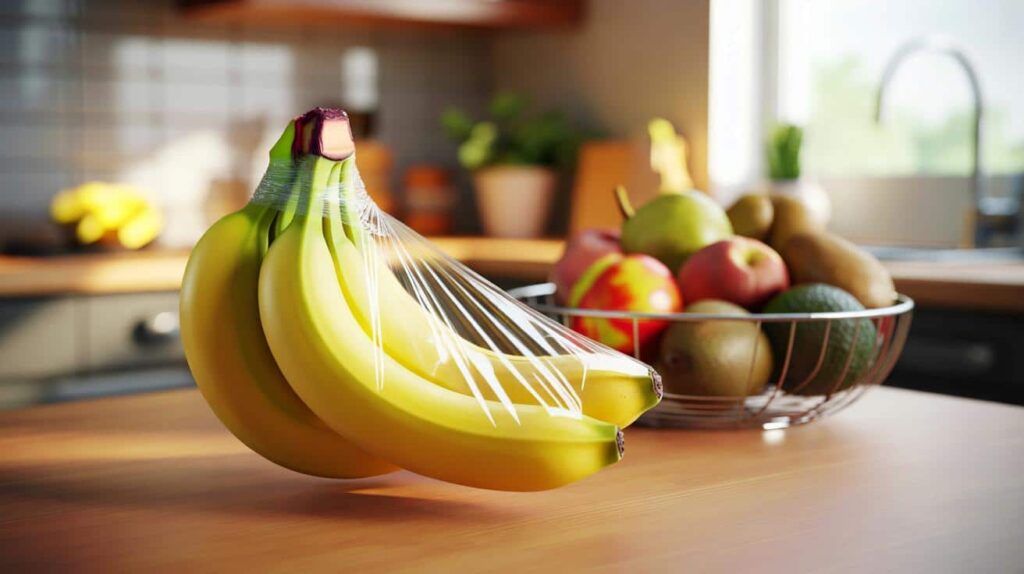
Here’s the trick many people only discover by chance: plastic wrap. Ordinary food wrap, the same roll you use to cover leftovers. If you wrap the crown of a banana bunch tightly in plastic, you can slow that rush of ripening gas escaping from the stem. Less gas in the air, less speed in the aging process.
Store the wrapped bunch on its own, away from apples and avocados, and you can stretch their bright-yellow life up to 10–14 days.
The gesture takes ten seconds. Tear off a small square of plastic wrap, pinch all the stems together, then wind the wrap tightly around the crown. You don’t need to mummy-wrap the entire bunch, only the top cluster where the bananas join. Each time you pull one off, just press the wrap back into place.
Let’s be honest: nobody really does this every single day. Yet the people who do it even “most of the time” swear by how many bananas they stop throwing away.
There’s a small catch: plastic wrap is not a magic shield if the rest of your setup works against you. If your bananas sit in a hot, sunny spot or share a bowl with half the fruit aisle, they’ll still speed up. So think of the wrap as a brake pedal, not a full stop. Use it together with a few simple habits:

- Keep bananas on the counter, but out of direct sun
- Store them away from apples, pears, kiwis, and avocados
- Hang them if you can, so the skins bruise less
- Wrap individual stems if you separate the bunch early
“Once I started wrapping the stems,” says Léa, a 34-year-old teacher who packs school snacks every morning, “I went from tossing three bananas a week to maybe one a month. It sounds silly, but seeing them stay yellow actually feels like a small daily win.”
More small habits that quietly change everything
There’s another tiny move that changes how long your bananas stay yellow: buying them at different stages. One slightly green bunch for later, one almost ready for today. That way, you’re not begging five bananas to be perfect on the same morning. You spread out the ripeness across your week.
*This simple staggering trick works better than any fancy storage gadget most of the time.*
Temperature plays its own role. The fridge won’t stop a yellow peel from browning on the outside, but it will slow the inside from going mushy. Many people let bananas ripen on the counter, then move the fully yellow ones to the fridge once they’re at their sweet spot. The peel may darken, yet the fruit inside often stays firm and pleasant far longer.
One thing to avoid: putting green bananas in the fridge. Cold can interrupt the ripening so much that they stay hard and tasteless.
There’s also the emotional side of it all. We’ve all been there, that moment when you buy a big bunch in a wave of good intentions, imagining smoothies, healthy snacks, banana pancakes on Sunday. Then life happens, you forget two of them at the back of the counter, and they cross that invisible line from “slightly freckled” to “nope.”
Those overripe bananas can still become cake, bread, or frozen dessert, but most of the time they don’t. The small act of wrapping the stems is less about perfection and more about cutting down those little moments of defeat in the kitchen.

| Key point | Detail | Value for the reader |
|---|---|---|
| Wrap the stems with plastic | Cover the crown of the bunch tightly with food wrap | Slows ethylene escape, keeps bananas yellow for up to two weeks |
| Keep bananas away from other fruit | Store separately from apples, pears, kiwis, and avocados | Reduces ripening gas build-up, cuts down on waste |
| Use stage-staggered buying and smart storage | Buy some slightly green, some ready; move ripe ones to the fridge | Guarantees better bananas all week and fewer last-minute tosses |
FAQ:
- How exactly do I wrap the banana stems?Group the stems together, place a small square of plastic wrap over the crown, and press it tightly around the joining point. When you remove a banana, press the wrap back over the remaining stems.
- Should I wrap each banana separately?You can. Wrapping individual stems works well if you separate the bunch early, though it takes more time. Wrapping the crown of the whole bunch already brings a big benefit.
- Can I use something other than plastic wrap?Yes. Beeswax wraps or reusable silicone covers can work, as long as they fit snugly around the stems and limit contact with air.
- Is it safe to eat bananas with brown spots?Yes. Brown-speckled bananas are usually sweeter and softer. As long as there’s no mold or fermented smell, they’re fine to eat or bake with.
- Why do bananas in the store stay perfect longer?Supermarkets often receive bananas that were cooled and shipped under controlled conditions, then stored away from ethylene-heavy fruit. At home, we usually lose that careful control—unless we recreate a bit of it with wrapping and smart placement.
