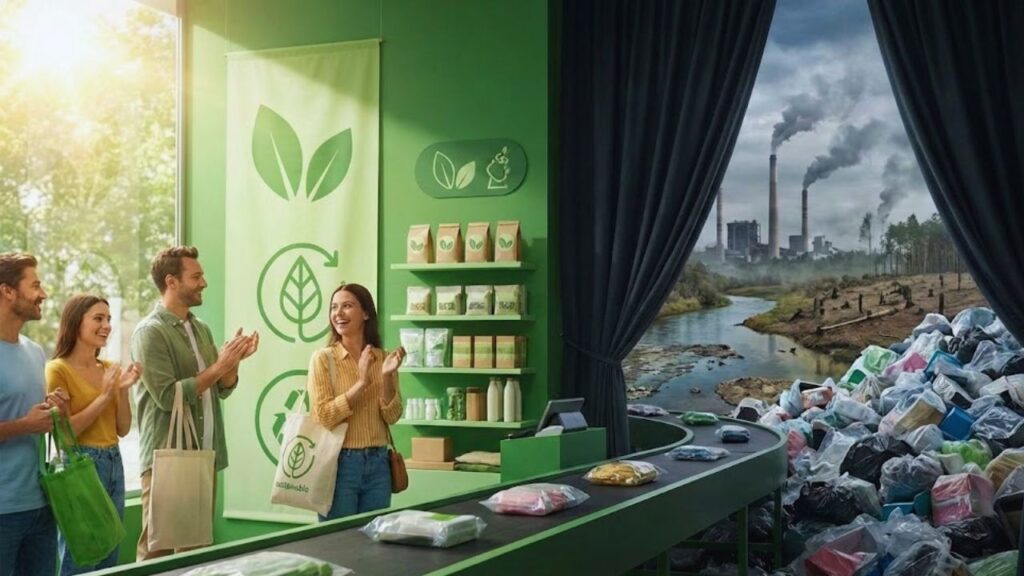
Eco-friendly brands are growing fast in the United States, and they promise cleaner products and a lifestyle without guilt for shoppers who care about the planet. These companies use reusable packaging and make claims about being carbon-neutral while presenting themselves as climate heroes. However the truth behind the green labels and attractive marketing is more complex. Many well-known sustainable brands still harm the environment in ways that rarely get attention. Learning how this happens & why people keep buying from them shows the real difference between good intentions and actual results in today’s green economy.
How eco friendly brands hide environmental damage
Many eco friendly brands use clever storytelling instead of making real changes. They highlight one good action while hiding larger problems in their supply chain. A company might use recycled packaging but still rely on resource-heavy manufacturing or production overseas that raises hidden shipping emissions. When brands share limited information it lets selective sustainability claims shape what consumers believe. Certifications often cover only small areas & create misleading green labels that seem official but ignore the full environmental picture. This creates a brand image that appears responsible while hiding the true environmental damage.
 What are the health benefits of melon?
Why green marketing keeps consumers cheering
Green branding succeeds by connecting with feelings and personal values. American consumers want to see themselves as helping rather than harming the environment. Companies rely on feel-good eco messaging to keep customers coming back by suggesting that purchasing their products is a way to make a difference. Social platforms boost this effect with influencer-driven trust signals that prioritize attractive visuals over critical thinking. This pattern eventually leads to brand moral comfort that discourages people from examining what companies actually do behind the scenes. When questions do arise convenient ethical shortcuts help consumers justify sticking with brands they already know and trust.

The real environmental cost of sustainable products
Many products labeled as sustainable still depend on methods that damage natural environments. Organic materials often need large amounts of land and water while renewable resources may require intensive farming practices that threaten wildlife habitats. Some companies choose to offset their carbon emissions rather than actually cutting them down, which results in continued pollution. Brief product lifespans also create waste problems, as environmentally friendly items get thrown away just as quickly as regular products. When these approaches expand worldwide, they show how incomplete solutions can still cause serious harm to the environment.
Understanding the green contradiction
The core problem with eco friendly branding is that sustainability gets treated as a product feature instead of a complete system. In the United States market-driven solutions reward how things look more than how they actually perform. This pushes brands to focus on improving their image rather than their real environmental impact. Consumers are right to want better options but the current system makes it difficult to tell the difference between genuine progress and clever marketing. Real change needs structural reforms and new regulations instead of just improved packaging labels. Until that happens the distance between corporate marketing claims & actual environmental results will keep getting wider.
| Eco Claim | What It Promises | Hidden Issue |
|---|---|---|
| Recycled Packaging | Less plastic waste | High energy processing |
| Carbon Neutral | Zero emissions impact | Reliance on offsets |
| Organic Materials | Eco-safe sourcing | Heavy water use |
| Ethical Supply Chain | Responsible production | Limited transparency |
Frequently Asked Questions (FAQs)
1. Are all eco friendly brands harmful?
No, but many still have environmental impacts that aren’t fully disclosed.

2. Why do consumers keep supporting them?
Green marketing builds consumer confidence and makes people less likely to doubt what companies say about their products. When businesses promote their environmental efforts customers tend to believe these messages without much skepticism. This happens because people want to support companies that care about the planet. The environmental claims create a positive impression that discourages critical thinking. Companies use green marketing to establish credibility with their audience. They highlight eco-friendly practices and sustainable materials in their advertising. These messages appeal to consumers who value environmental responsibility. The positive associations with nature & sustainability make the claims seem trustworthy. This trust develops because green marketing taps into shared values about protecting the environment. People feel good about choosing products that appear environmentally friendly. The emotional connection reduces their motivation to investigate whether the claims are accurate. They accept the marketing messages at face value rather than seeking proof or verification. The result is that consumers become less questioning of environmental claims. They assume companies are being honest about their green initiatives. This reduced skepticism benefits businesses by making their marketing more effective. However it can also lead to situations where companies exaggerate or misrepresent their environmental efforts without facing much scrutiny from customers.
3. Are certifications always reliable?
Some are useful, but many cover only a small part of a product’s lifecycle.
4. How can consumers make better choices?
By researching supply chains, longevity, and overall environmental impact.