The first time you bump the thermostat up after a cold snap, there’s always that small, guilty glance at the display. 19 °C. 20 °C. 21 °C. You tap the button, feel a wave of comfort, and at the same time hear the little inner voice counting euros and kilowatt-hours.
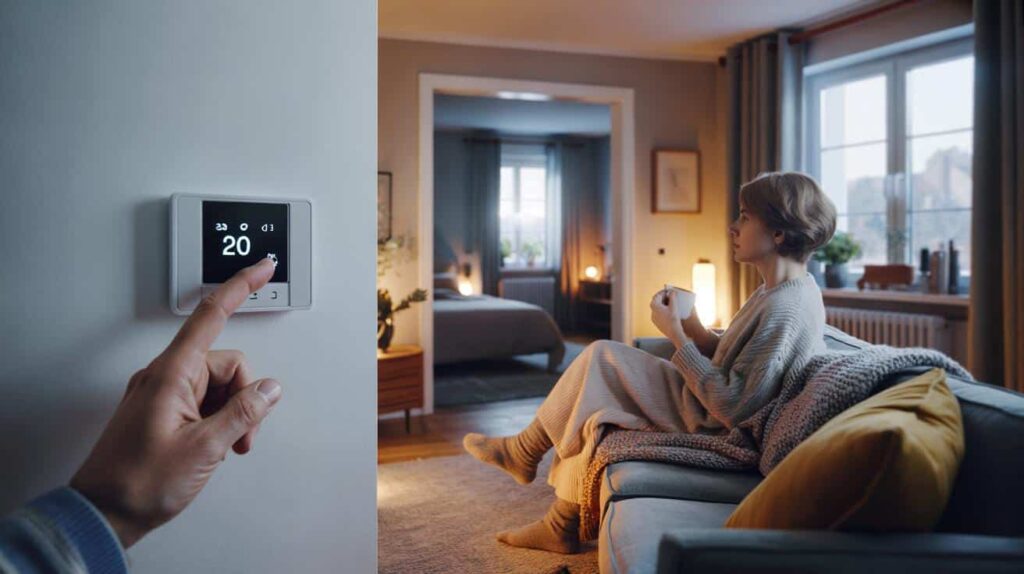
For years, the magic number was hammered into our heads: 19 °C. Anything above that and you were reckless, anything below and you were heroic. But bodies, homes and winters don’t always fit into a neat, round figure.
On a dull Tuesday evening, wrapped in a sweater, you wonder if you’re being careful or just freezing for nothing.
Because quietly, almost without us noticing, experts have started shifting the target.
The 19 °C myth meets real life comfort
When energy prices exploded and climate anxiety entered the living room, 19 °C became a kind of moral standard. Turning the thermostat higher felt like cheating on a shared pact. Friends compared numbers as if they were exam grades: 18.5, 19, 19.5 at most.
Yet every home visit tells a different story. In one flat, 19 °C feels almost cosy. In another, at the same temperature, your toes go numb and your breath steams slightly in front of you. The number is the same, the sensation is not.
That’s where experts started to push back on the one-size-fits-all rule.
Take the case of Camille, 34, who lives in a 1970s building on the edge of town. She tried to “do the right thing” last winter by locking in 19 °C. She bought thick socks, layered two jumpers, drank ridiculous amounts of tea.
By January she was sleeping badly, catching every cold going, and spending most evenings under a blanket on the sofa. When she finally spoke to her GP and an energy advisor, the verdict was clear: her apartment lost heat so fast that 19 °C on paper meant cool, damp air in reality.
They suggested testing 20–20.5 °C in living areas. Her heating bill barely moved, but her quality of life did.
Energy specialists now talk less about a moral number and more about a comfort range. The new consensus: around **19–21 °C in living rooms**, with a sweet spot for many people between 19.5 and 20.5 °C, depending on the home’s insulation, age, health, and how much you move around.
Instead of obsessing over that old 19 °C benchmark, they invite people to listen to their bodies and their walls. A dry, well-insulated house at 19 °C can feel warmer than a damp, leaky one at 21 °C.
The real guideline becomes: find the lowest temperature at which you still feel genuinely well, *not heroically cold*.
The new rules of thumb for healthier, smarter heating
The temperature experts now recommend isn’t a single digit, but a smart pattern across the home. They suggest aiming for about **20 °C in living spaces during the day**, 17–18 °C in bedrooms at night, and 16–17 °C in rarely used rooms to avoid damp.
The idea is simple: heat where life actually happens, soften the rest. Rather than keeping everything at a rigid 19 °C, you shape the warmth around your routines. Cooking, working, playing with kids, watching a film – those rooms get priority.
And you don’t chase degrees hour by hour. You set a base temperature and let the system work smoothly instead of constantly switching it off and on.
A family of four in a semi-detached house near Lyon tested this approach last winter. Before, they kept the entire house stuck at 19 °C day and night, yet still felt chilly in the evenings. The parents complained about the cold in the living room, the kids said their bedrooms were stuffy.
With an energy coach, they reprogrammed everything: 20 °C in the lounge from 5 p.m. to 10 p.m., 19 °C in the kitchen during breakfast and dinner, 17.5 °C in bedrooms from 10 p.m., and 16.5 °C in the hallway and guest room all day.
After a week of adjustments, they reported something strange: they forgot about the thermostat. Comfort felt natural, and the bill, at the end of the season, was slightly lower than the previous year.
Thermal engineers insist this isn’t magic, it’s physics. A home that stays at a stable, slightly higher temperature can use less energy than one that swings wildly from too cold to too hot. Heating systems work more efficiently in steady mode than in constant catch-up.
There’s also the health angle. Below 18 °C long term, the risk of respiratory issues and joint pain rises, especially for older adults, babies, and people with chronic illness. That’s why many medical bodies now recommend a minimum of 18–19 °C for vulnerable people, and up to 21 °C if they’re sedentary.
Let’s be honest: nobody really checks the thermostat every single hour to adapt it to their heart rate and activity level. The realistic goal is a simple, comfortable range you can live with for months without thinking about it nonstop.
How to find your real comfort temperature (and keep your bill sane)
One expert trick is to treat your first cold week as a “calibration” period. You start with 20 °C in your main living room for three full days, without touching the thermostat. You just live, observe, and take mental notes: Are your hands cold? Do you wear two jumpers? Do you sleep well?
Then you nudge down by 0.5 °C and repeat for two days. Same questions, same quiet observation. If you suddenly feel tense, shivery, or reluctant to get out of bed, you’ve gone too low.
Your comfort temperature is usually the lowest point where you still forget, most of the time, that the heating exists.
This is where a lot of people trip up: they jump from 21 °C to 19 °C overnight, feel miserable, and decide that any “eco” approach is a form of punishment. The body doesn’t like brutal changes. It adapts over a week, not over a single gloomy Sunday.
There’s also the emotional weight of cold. For some, having grown up in poorly heated houses, the slightest chill brings back memories of shivering mornings and fogged-up windows. That makes them cling to 22 °C as a safety zone.
Instead of judging yourself, you adjust slowly. Maybe your journey this winter is simply going from 21.5 °C to 20.5 °C and sealing a few drafts. That’s already progress.
“Forget the obsession with 19 °C as a badge of virtue,” says energy consultant Laura Ferrell. “Your goal is a home where you feel well and your heating system isn’t constantly fighting leaks, drafts and bad habits. The right temperature is the one that protects both your health and your budget.”
- Test a 0.5 °C adjustment, not a 2 °C shock: tiny steps are far easier to accept over time.
- Use thick curtains, draft stoppers and door seals before touching the thermostat.
- Keep bedrooms slightly cooler than living rooms to sleep better and save quietly.
- Check on elderly relatives: their “safe” minimum is often a touch higher than yours.
- Note how you feel morning, afternoon and evening rather than fixating on the number.
The quiet shift from a moral number to personal balance
The 19 °C rule had its place: it woke us up to the link between comfort, energy and the planet. Yet a single figure can’t cover all lives, all walls, all bodies. The new recommendations are more flexible, slightly less heroic, and probably more sustainable: roughly 19–21 °C in living rooms, 17–18 °C in bedrooms, a bit higher for the most fragile among us.
Once you’ve done that first calibration, the question stops being “Am I good enough for 19 °C?” and becomes “Am I honestly okay in my own home?” Some days you’ll throw on a sweater and feel fine at 19.5 °C. On a raw, wet day, you might tap up to 20.5 °C and light a candle.
We’ve all been there, that moment when you hesitate finger-on-thermostat, torn between guilt and comfort. Maybe the real shift is this: accepting that the right temperature is a moving target, one you adjust with your lifestyle, your health, the age of your house, and the price you’re ready to pay – in euros, and in goosebumps.
| Key point | Detail | Value for the reader |
|---|---|---|
| Comfort range, not a fixed 19 °C | Experts now recommend around 19–21 °C in living rooms, adjusted to insulation and health | Lets you heat without guilt while keeping bills and health in balance |
| Different rooms, different targets | Warmer living spaces, cooler bedrooms, minimal heat in unused rooms to avoid damp | Practical roadmap to reprogram radiators or thermostats room by room |
| Slow, 0.5 °C adjustments | Use a week of testing to find your lowest comfortable temperature | Reduces stress and avoids the “I’m freezing, forget this” rebound effect |
FAQ:
- What temperature do experts recommend now instead of 19 °C?Most experts now talk about a range: roughly 19–21 °C in living rooms, with many people settling around 19.5–20.5 °C depending on how well their home is insulated and how active they are.
- Is it unhealthy to heat below 19 °C?Short periods at 18–19 °C are usually fine for healthy adults, but below 18 °C for long stretches can raise risks for older people, babies and those with respiratory or heart issues.
- What about bedrooms, should they also be at 20 °C?Most sleep specialists suggest 17–18 °C for bedrooms, which helps you sleep better while cutting energy use; the key is warm bedding and no damp.
- Will turning my heating off during the day save more than keeping a stable temperature?In many homes, large temperature swings make the system work harder; a slightly lower but stable base, with small boosts when you’re home, is often more efficient.
- How do I reduce my bill if I can’t lower the temperature much?Focus on the envelope: seal drafts, close shutters and curtains at night, bleed radiators, and only heat rooms you really use – these tweaks can save almost as much as a one-degree drop.