In a fascinating blend of nature and innovation, researchers in China have uncovered a unique plant species capable of absorbing and storing rare earth minerals from the soil. What implications could this extraordinary finding hold for the future of sustainable resource management?
Smartphones, electric vehicles wind turbines and military technology all depend on these minerals. Companies typically extract them using mining methods that harm the environment.

The finding has stunned researchers worldwide, not only because of the plant’s unusual diet, but because it may point toward a greener future for rare earth extraction.

Neither Oil Nor Butter: The Secret To The Crispiest Roast Potatoes of…
Plants do not actually eat rare earth minerals in the traditional sense. Instead they absorb these elements from the soil through their root systems in a process called hyperaccumulation. Some plant species have evolved the ability to take up unusually high concentrations of metals and minerals from the ground and store them in their leaves and stems without being harmed. This matters for several important reasons. First it offers a potential alternative to conventional mining methods that often damage the environment through excavation and chemical processing. Second it could provide access to rare earth elements that are essential for modern technology including smartphones and electric vehicles. Third this approach might allow us to extract valuable minerals from areas where traditional mining would be too expensive or environmentally destructive. The process works through a technique called phytomining. Scientists plant specific hyperaccumulator species in soil that contains rare earth minerals. As the plants grow they draw these elements up through their roots and concentrate them in their tissues. After the plants mature they are harvested and burned. The resulting ash contains a much higher concentration of the target minerals than the original soil did. This ash can then be processed to extract pure rare earth elements. Could this change global mining forever? The answer is complicated. Phytomining has real advantages including lower environmental impact and the ability to work on land unsuitable for traditional mining. However it also has significant limitations. The process is much slower than conventional mining & currently produces smaller quantities of minerals. It works best for certain elements but not all rare earth minerals can be efficiently extracted this way. The technology is still developing and faces economic challenges. For phytomining to truly transform the industry it would need to become faster and more cost effective. Researchers are working on identifying better hyperaccumulator plants and improving extraction techniques. Some pilot projects have shown promise but large scale commercial operations remain limited. In conclusion while phytomining represents an innovative approach to mineral extraction it is more likely to complement rather than replace traditional mining methods in the near future.
What Are Rare Earth Minerals—and Why Are They So Important?
Rare earth minerals consist of 17 metallic elements that play an important role in modern technology. The name is somewhat misleading because these elements are not particularly scarce in nature. However extracting them from the earth presents significant challenges and requires substantial financial investment. These elements appear throughout the earth’s crust in relatively decent quantities. The real problem lies in the extraction process itself. Mining operations must deal with complex geological formations where these minerals exist in low concentrations. Workers need to process enormous amounts of rock and soil to obtain even small quantities of usable material. The extraction process also creates environmental concerns. It generates large volumes of waste material and often involves harsh chemicals. Many countries have strict regulations governing these mining operations because of the potential environmental impact. This regulatory oversight adds another layer of complexity and expense to the entire operation. Processing the raw materials into refined elements requires specialized facilities and equipment. The technology needed for separation and purification represents a major capital investment. Only a handful of companies worldwide have developed the expertise & infrastructure necessary to handle these materials efficiently. Global supply chains for rare earth minerals remain concentrated in specific regions. This geographical concentration creates potential vulnerabilities for industries that depend on steady access to these materials. Manufacturers of electronics and renewable energy equipment particularly rely on consistent supplies of these elements. The economic factors surrounding rare earth mineral extraction continue to evolve. Market prices fluctuate based on demand from various industries and the availability of processing capacity. Companies must carefully evaluate whether new mining projects make financial sense given the high upfront costs and uncertain long-term returns.
They are essential for:
If You Want To Live Past 80, Quit These 6 Silent Habits…
- Smartphones and laptops
- Electric vehicle batteries and motors
- Wind turbines
- Medical imaging equipment
- Military and aerospace systems
Mining these elements typically involves toxic chemicals, radioactive waste, and massive environmental damage. That is why this plant discovery is so significant.
The Groundbreaking Discovery
Researchers studying vegetation near rare earth–rich soil regions in China noticed something unusual: certain plants were thriving in soil that was hostile to most life forms.
Upon closer analysis, scientists discovered that one plant species was absorbing rare earth elements through its roots and storing them in its tissues—a behavior never confirmed before at this scale.
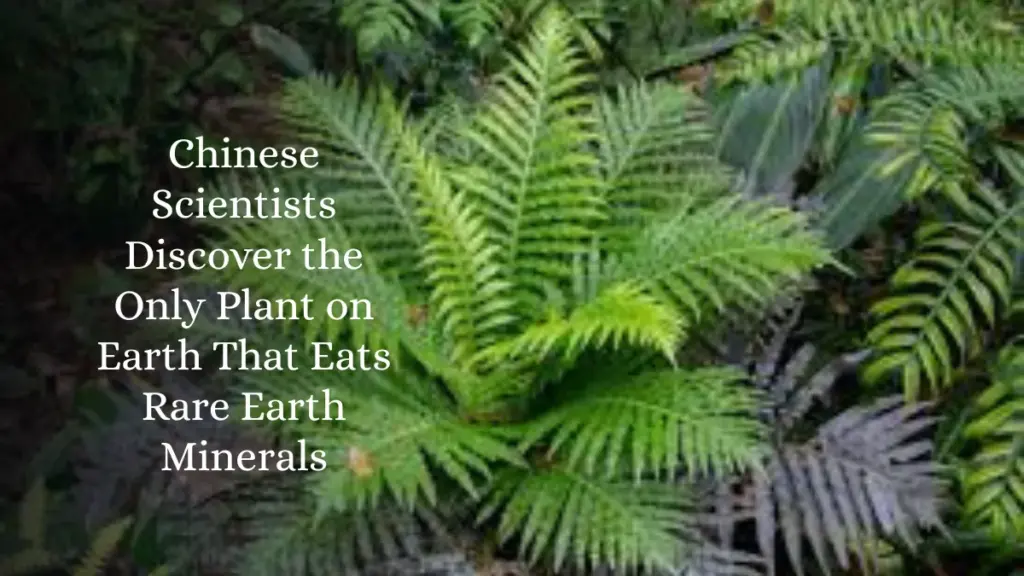
This makes it the only known plant on Earth that naturally accumulates rare earth minerals in measurable concentrations.
How Does the Plant “Eat” Rare Earth Minerals?
The plant does not chew rocks or consume minerals in a traditional sense. Instead, it uses a sophisticated biological process.
The key mechanisms include:
- Specialized root proteins that bind rare earth ions
- Symbiotic soil microbes that convert minerals into absorbable forms
- Cellular storage compartments that safely isolate toxic elements
Most plants avoid rare earth elements because they interfere with normal growth. This plant, however, appears to have evolved a tolerance—and even a preference—for them.
Why This Plant Is So Unusual
Plants that absorb heavy metals do exist. They are called hyperaccumulators and are sometimes used to clean polluted soil. But rare earth elements behave differently from heavy metals like lead or cadmium.
What makes this discovery unique:
- Rare earth elements are chemically complex
- They usually disrupt plant metabolism
- No previous plant was known to store them efficiently
This species does not just survive in soil that contains rare earth elements. It actually gathers these materials inside itself at much higher amounts than regular plants do.
Where Was the Plant Found?
The plant was discovered in southern China, a region already known for rich rare earth deposits. These areas have naturally mineral-heavy soils that are often toxic to standard crops.
# The exact location remains restricted for these reasons:
Security concerns require keeping the precise coordinates confidential to protect the site from potential threats & unauthorized access. Environmental protection measures prevent public disclosure to avoid damage from excessive visitor traffic and human interference with sensitive ecosystems. Cultural preservation needs demand limited access to safeguard historical artifacts and sacred spaces from vandalism or theft. Research integrity depends on controlling site access to maintain scientific study conditions without contamination or disruption. Legal requirements mandate confidentiality under various regulations protecting archaeological sites and endangered species habitats. Private property rights restrict information sharing when locations fall within privately owned land boundaries. Safety considerations limit disclosure to prevent accidents in hazardous areas with unstable terrain or dangerous wildlife. Resource management strategies control visitor numbers to prevent overuse and degradation of fragile natural features. Indigenous community requests honor traditional knowledge and spiritual significance by restricting outsider access to ceremonial grounds. Conservation efforts benefit from reduced human presence allowing natural processes to continue without interference.
- Ongoing research
- Environmental protection concerns
- Strategic importance of rare earth resources
However, scientists confirmed that the plant grows naturally in the wild, not in a laboratory environment.
Could This Replace Rare Earth Mining?
Not entirely but it could transform how rare earths are sourced. The discovery does not completely change the global supply chain overnight. However it represents a significant shift in where these critical materials might come from in the future. Rare earth elements have traditionally been dominated by a handful of countries that control both mining and processing operations. This new development opens up alternative pathways for obtaining these essential resources. The potential impact extends beyond simple geography. It affects strategic planning for technology manufacturers who depend on steady supplies of rare earth materials. Companies that produce electronics, renewable energy equipment, and defense systems all rely heavily on these elements. Having access to new sources reduces vulnerability to supply disruptions and price fluctuations. The transformation would happen gradually rather than immediately. Developing new extraction sites requires substantial investment in infrastructure & technology. Environmental assessments must be completed & regulatory approvals obtained before any large-scale operations can begin. The timeline from discovery to full production typically spans several years. Economic factors also play a crucial role in determining whether new sources become viable. Extraction costs must remain competitive with existing suppliers or offer other advantages that justify higher prices. Processing facilities need to be built or adapted to handle the specific characteristics of newly discovered deposits. The geopolitical implications deserve attention as well. Countries that gain access to rare earth resources can reduce their dependence on foreign suppliers. This shift in supply dynamics could alter international trade relationships and influence diplomatic negotiations. Nations currently dominating the market may need to adjust their strategies in response to emerging competition. Environmental considerations cannot be ignored in this transformation. New extraction methods might offer cleaner alternatives to current practices that often generate significant pollution. Sustainable approaches to rare earth mining could set new industry standards and address growing concerns about the ecological impact of resource extraction. The technology sector watches these developments closely because rare earths are fundamental to modern devices. Smartphones computers, electric vehicles, and wind turbines all contain these materials. Any change in supply availability directly affects production planning and cost structures for manufacturers worldwide.
The process called phytomining works by growing plants that collect valuable minerals in their tissues. After the plants mature they are harvested and the metals are then extracted from the plant material. This method offers an alternative to traditional mining techniques. Plants naturally absorb minerals from soil through their root systems. Certain plant species have evolved to take up unusually high concentrations of specific metals. Scientists & engineers select these special plants & cultivate them on land containing metal deposits. The plants grow over several months and draw metals from the soil into their leaves and stems. When the plants reach full size workers cut them down & collect the biomass. The harvested plant material goes through processing to isolate and recover the metals. This typically involves burning the plants to create ash that contains concentrated metal compounds. Further refining separates the pure metals from other materials. Phytomining provides several advantages over conventional mining operations. It causes less environmental damage because it does not require digging large pits or creating extensive underground tunnels. The process works well on land with low metal concentrations that would not justify traditional mining costs. It can also help clean contaminated soil by removing toxic metals while producing valuable materials. However this approach has limitations. The process takes much longer than conventional mining since plants need time to grow. The amount of metal recovered per harvest is relatively small compared to ore extraction. Phytomining works best for specific metals like nickel and gold that certain plants readily absorb. Despite these constraints the technique continues to develop as researchers identify more suitable plant species and improve extraction methods.

Potential benefits include:
- Far less environmental damage
- Reduced toxic waste
- Lower carbon emissions
- Restoration of degraded land
Instead of tearing up landscapes, future rare earth extraction could involve fields of carefully managed plants.
The Challenges Scientists Still Face
Despite the excitement, this discovery comes with limitations.
Major challenges include:
- Slow growth rates compared to industrial mining
- Limited biomass production
- Complex extraction from plant tissue
- Need for controlled soil conditions
Scientists stress that this plant is not a magic solution, but a promising starting point for bio-based mineral recovery.
Why This Matters for the Global Economy
Rare earth elements are at the heart of geopolitical competition. Supply chains are fragile, and demand is rising rapidly due to clean energy and digital technologies.
A biological method of rare earth extraction could:
- Reduce dependence on destructive mining
- Diversify supply sources
- Lower geopolitical tensions over mineral access
Countries might change their approach to resource security even if they only adopt parts of this system.
What This Discovery Says About Nature
Perhaps the most fascinating aspect is what this reveals about evolution.
Nature has spent millions of years experimenting. This plant demonstrates that:
- Life can adapt to extreme chemical environments
- Biological systems can solve problems humans struggle with
- Solutions to modern crises may already exist in ecosystems
It reminds scientists that biology often outperforms engineering when given enough time.
What Happens Next?
Chinese researchers are now:
- Mapping the plant’s genetic traits
- Studying how it transports and stores minerals
- Testing whether its abilities can be transferred to other plants
This research might help scientists create special crops that can pull minerals from the ground. These plants would combine farming methods with mining techniques and environmental protection strategies. If the work succeeds farmers could grow these engineered plants to extract valuable materials from soil. The approach would merge three different fields into one practical solution for mineral recovery.
The discovery of a plant that can absorb rare earth minerals marks a stunning milestone in scientific research. Found by Chinese scientists, this unique species challenges long-held assumptions about what plants can do and opens the door to cleaner, more sustainable ways of accessing critical resources.
While it will not replace mining overnight, it offers a glimpse into a future where technology works with nature rather than against it. In a world hungry for rare earths, the solution may quite literally be growing beneath our feet.
FAQs
1. Is this plant dangerous to humans?
No evidence suggests it is dangerous, but it is not edible and is being studied strictly for scientific purposes.
2. Can this plant be grown anywhere?
The plant does not grow everywhere yet. It only seems to do well in soils that contain high amounts of rare earth elements and need very particular environmental conditions to survive.
3. Will this discovery end rare earth mining?
No but it has the potential to meaningfully decrease harm to the environment and work alongside conventional mining techniques.
Related Posts
Neither Oil Nor Butter: The Secret To The Crispiest Roast Potatoes of…
If You Want To Live Past 80, Quit These 6 Silent Habits…
The One Daily Drink That Lowers Blood Pressure Better Than Most Medications
The Subtle Habit That Reveals Someone Is Secretly Narcissistic
Why Finishing Your Plate Is Ruining Your Life – According To Behavioral…
# Tags: botany research Chinese scientists environmental science future resources green technology phytomining plant discovery plant evolution rare earth minerals sustainable mining
This article explores research in plant science conducted by scientists from China. The work focuses on environmental science and the development of future resources through green technology. Key topics include phytomining which involves using plants to extract minerals from soil. The research also covers plant discovery & plant evolution as they relate to rare earth minerals. These minerals are important for modern technology but difficult to obtain through traditional methods. Sustainable mining practices that use plants offer an alternative approach that reduces environmental damage. The study represents progress in understanding how certain plants can accumulate valuable minerals in their tissues. This knowledge could lead to new methods for obtaining rare earth elements while protecting ecosystems. The research combines botanical knowledge with practical applications in resource management and environmental protection.