
Towel around her shoulders, phone in one hand, she drags a shiny plastic comb through dripping hair with the other. The bathroom is steamy, the mirror half-fogged, but the sound cuts through it all: that faint, rubbery snap of strands under tension. She winces, shakes off a few broken hairs from the comb teeth, and shrugs. “My hair’s everywhere lately,” she mutters, brushing harder to get it over with before work. She blames hormones, stress, the weather, her pillowcase—anything but this tiny daily ritual.
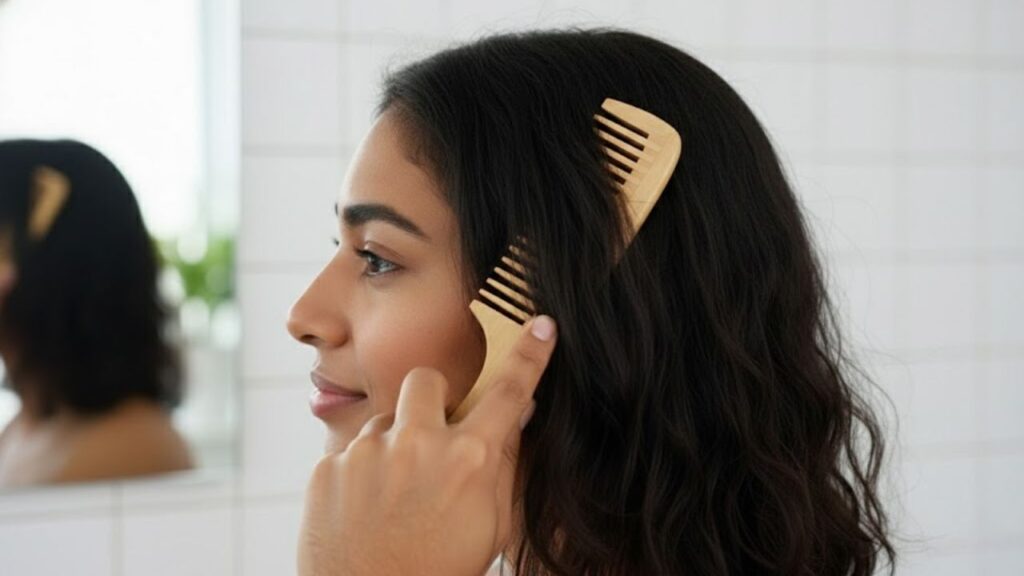
What Happens When You Brush Wet Hair
Right after washing your hair it feels soft and heavy with a stretchy quality. It appears healthier because it lies flat and smooth from the water and conditioner coating it. But the reality is different. When hair is wet the strands swell up and the outer layer lifts slightly like roof shingles during bad weather. The natural connections inside each hair strand become temporarily weak. If you use a stiff plastic comb with teeth placed close together it works like a small prying tool that stretches the hair beyond what it can handle. Some strands break right away while others develop tiny weak spots. Over time this leads to thinner hair and split ends even though you might not see the damage happening at first.

Salon Insights on Mechanical Hair Damage
In a London salon a stylist gathered hair from her regular clients throughout an entire year. She observed that clients who consistently arrived with wet hair & used hard plastic combs left behind far more broken fragments than those experiencing normal hair loss. One woman in her late thirties believed she was going bald because her ponytail appeared thinner. The stylist suggested she start detangling damp hair using a softer comb instead. After four months the amount of broken hair reduced dramatically. This demonstrates that everyday habits after washing your hair matter just as much as genetics when it comes to maintaining thickness and strength.

How to Protect Hair When Detangling
The best moment to remove tangles is not when your hair is soaking wet. Press water out using a soft towel or cotton T-shirt rather than rubbing it dry. Choose a wide-tooth comb or a flexible detangling brush or a wooden comb. Begin at the bottom and move upward through small sections. Stop when you reach a knot and use your fingers to gently work it loose. Do not pull a stiff comb straight down from roots to ends because this causes damage that builds up over time. Hair that is fine or bleached or curly faces the highest risk. These basic adjustments help maintain length and volume and keep your ponytail looking thick in the future.

Summary and Expert Recommendations
Hair specialists point out that the thinning you can see usually does not come from hair falling out at the scalp but from many strands breaking in the middle because of harsh treatment. You can stop this by following some easy guidelines: only comb when your hair is slightly wet choose wide-tooth combs or soft brushes, begin at the tips and work upward, apply conditioner to help the comb glide through, and stop gently when you hit a tangle. These basic everyday practices might not seem important but they steadily maintain your hair’s thickness, durability & growth over time.

| Point clé | Détail | Intérêt pour le lecteur |
|---|---|---|
| Wet hair is structurally weaker | Water swells the hair shaft and loosens internal bonds, making strands more stretch-prone and fragile. | Explains why post-shower habits, not just genetics, affect thinning and breakage. |
| Rigid plastic combs increase breakage | Narrow, inflexible teeth force through tangles, causing snapping at mid-lengths and ends. | Gives a concrete culprit the reader can replace or stop using. |
| Gentle detangling protects long-term density | Using wide-tooth or flexible tools on damp hair, starting from the ends, reduces mechanical damage. | Offers a clear, doable routine change that preserves thickness and length over time. |
