The process looked set to favour France’s Rafale at one point, but a late twist has upended the race and left Paris empty-handed, while a Swedish rival walks away with one of Latin America’s biggest recent defence deals.
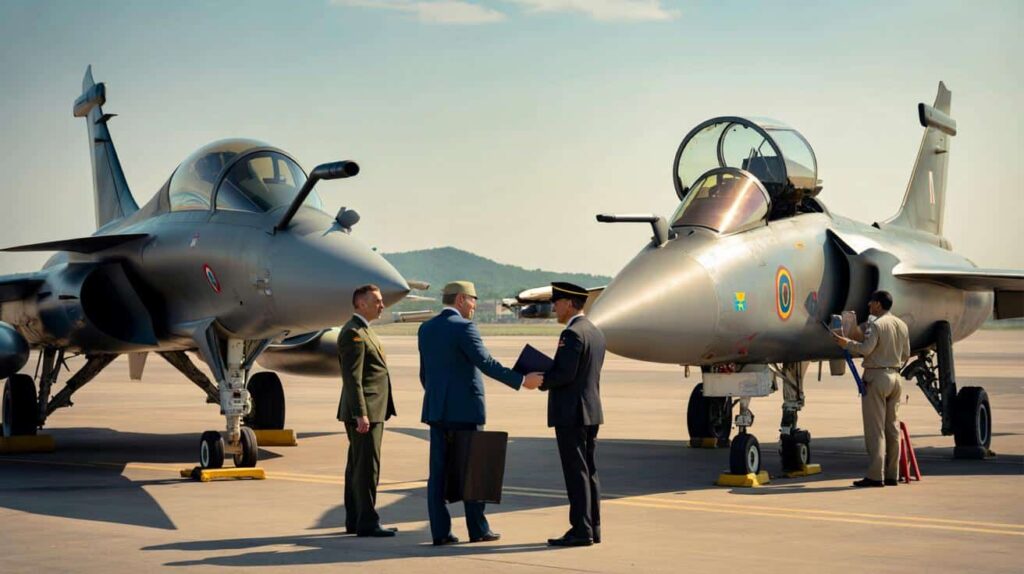
A €3.2 billion deal that slipped away
In 2022, Colombian officials openly listed the Rafale among the top contenders to replace their ageing Israeli-built Kfir fighters. French negotiators saw a promising export opportunity and put forward a package worth about €2.96 billion.

On paper, the offer ticked many boxes. It came from Dassault Aviation, a proven supplier with a long export record, and it undercut the rival bid on price. Yet Bogotá eventually chose to sign with Saab, the Swedish manufacturer of the JAS 39 Gripen.

The Colombian government will spend roughly €3.2 billion on 16 Saab JAS 39 Gripen jets, rejecting a cheaper French proposal.
The contract covers 16 aircraft, associated weapons and training, and long-term support. These Gripens will replace Colombia’s Kfir fleet, which has served for more than four decades and is increasingly costly to maintain and operate.
For Dassault, the loss stings. The Rafale has enjoyed strong export momentum in recent years, especially in Asia and the Middle East. Missing out on a large South American contract means forgoing not just the headline value of the deal but also years of maintenance and upgrade work that usually follow a fighter sale.
Why Colombia paid more for Saab
The French bid was cheaper, so why pay extra for Saab? Colombian officials have not released a detailed breakdown, but several factors likely weighed in.
- Industrial offset: Saab traditionally offers local industrial participation and technology-transfer packages.
- Operational costs: The Gripen is marketed as a lighter, cheaper-to-fly aircraft than heavier twin-engine fighters.
- Political balance: Choosing Sweden may feel less politically loaded than aligning with a major military power.
Latin American air forces often operate on tight budgets, where hourly flight cost and ease of maintenance matter as much as initial purchase price. Saab has built its pitch around affordability over the full life of the aircraft, not just the sticker price.
Colombia appears to have prioritised long-term operating costs, industrial cooperation and political flexibility over a slightly lower acquisition cost.
There is also a diplomatic angle. Sweden, while close to NATO, is perceived as a more neutral supplier than the US or France. For a country like Colombia, that can reduce the risk of future political pressure over how aircraft are used or with whom they are deployed.
What the setback means for France
Rafale’s export story is still strong
The Colombian decision has raised questions in Paris about whether France’s military-industrial image is slipping. The memory of the cancelled “contract of the century” with Australia, which scrapped a massive submarine deal with Naval Group, still looms large.
Yet the bigger picture looks less gloomy. The Rafale remains the flagship of French arms exports. Since entering service, more than 500 units have been produced or ordered, with around 234 for France and 273 for foreign customers.
India is now one of the programme’s key clients. New Delhi has already taken delivery of 36 Rafale jets for its air force. In April, it signed another deal for 26 navalised Rafales for its aircraft carriers, reinforcing the aircraft’s role in India’s long-term defence planning.
Despite Colombia’s rejection, Rafale is still the best-selling item in France’s defence catalogue, with solid demand from Asia and the Middle East.
A possible additional Indian order of around 40 aircraft is still under discussion, though not guaranteed. Other countries are also evaluating the Rafale as they plan to retire fleets of US, Russian or older European jets.

A reminder that no export is guaranteed
The Colombian U-turn underlines a basic rule of the arms trade: being technically strong and competitively priced does not guarantee success. Strategic calculations, domestic politics, and changing leadership can flip decisions late in the process.
In Bogotá, the final choice reflects Colombia’s own risk assessments and alliances. The government may have decided that diversifying suppliers away from traditional partners offers more bargaining power and resilience.
Gripen vs Rafale: two very different bets
On the surface, both aircraft sit in the same category: modern multi-role fighters designed for air-to-air combat and ground attack. In practice, their design philosophies are distinct.
| Feature | Rafale | Gripen |
|---|---|---|
| Engines | Twin-engine | Single-engine |
| Approximate role | Heavier, higher payload, carrier-capable | Lighter, cost-conscious, agile |
| Operating costs | Higher per flight hour | Marketed as relatively low per flight hour |
| Target customers | Countries seeking high-end capability | Air forces with tighter budgets |
For a country managing limited resources and facing mostly regional threats, the Gripen can look like a pragmatic compromise. It offers modern sensors and weapons at a running cost that fits smaller defence budgets.
By contrast, the Rafale is built to handle demanding missions, from nuclear deterrence to carrier operations. That versatility comes with higher complexity and support demands, although France argues the aircraft’s maturity keeps costs under control.
How such defence choices ripple through a country
A fighter contract is not just about planes. It shapes a country’s military doctrine, industrial base and diplomatic posture for decades. Colombia’s choice of the Gripen suggests a series of long-term bets.
Training, logistics and tactics will now be aligned with Swedish systems and, by extension, NATO standards, since Saab works closely with alliance members. That might make joint training with European air forces easier in the years ahead.
On the economic front, Colombian aerospace companies can expect to gain work through offset agreements. Those deals might involve maintenance centres, component production, or cooperation on future upgrades, potentially opening doors to international supply chains.
Key terms and what they mean for readers
Defence deals often rely on jargon that masks what is really at stake. Two notions matter especially here: “life-cycle cost” and “offsets”.
Life-cycle cost covers everything from spare parts and fuel to pilot training and software support over the entire service life of the aircraft, which can stretch 30 to 40 years. A jet that is cheaper to buy can end up more expensive if it guzzles fuel or requires frequent, complex maintenance.
Offsets are industrial or economic benefits granted to the buying country. For example, Saab might commit to:
- setting up a maintenance hub in Colombia
- subcontracting parts of the aircraft to Colombian factories
- sharing certain technologies with local engineers
These extras help governments justify huge defence outlays to their taxpayers, by pointing to jobs, training and new skills. At the same time, they create long-term dependence on the supplier, which can subtly shape foreign policy choices.
If the Gripen deal works smoothly, Colombia could gain a modest but credible aerospace niche and a more modern air force at a manageable cost. If delays, overruns or political frictions arise, Bogotá may find itself locked into a system that is tough and expensive to replace. That delicate balance is what every government wrestles with when signing a contract like the one France just lost.