
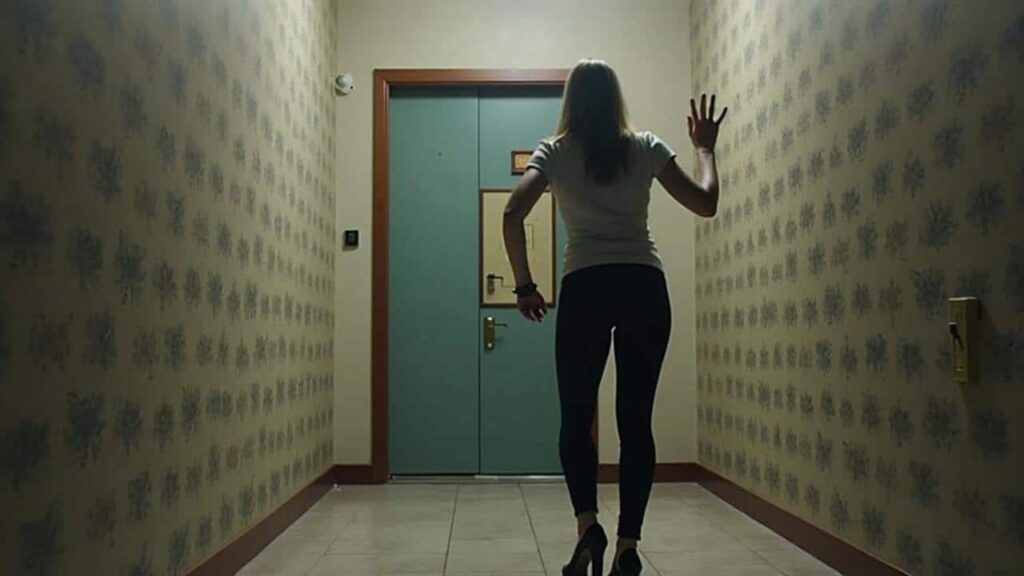
Only now, the key she had used for 17 years no longer fit. The lock had been changed. Through the living-room window, she could see the outline of a sofa that wasn’t hers, children’s toys on the floor, and a stack of supermarket bags in what used to be her hallway. When the squatters finally went on holiday, bags in hand and car loaded, she felt her heart slam in her chest. She walked across the street, turned the old key in the old lock they’d stupidly put back… and stepped into her own house. For a few days, victory tasted real. Then the letter from the authorities arrived. A cold, official warning. A possible heavy fine. Suddenly, the whole story flipped.
When your own home stops being “yours”
The strangest part isn’t the broken window or the changed lock. It’s the feeling of becoming a visitor in a place you painted, furnished, and paid for every month. Owners in this situation talk about a quiet kind of shock. You stand on the pavement, watching strangers use your balcony, hang their laundry, water plants you didn’t buy. The neighbours look away. Or they shrug. “There’s nothing we can do.” You start to wonder if the law sees you as the intruder. That’s the crack where anger slips in.

This is more than a one-off viral story. Across Europe and in parts of the US, reports of owners discovering squatters in their homes have been stacking up. In Spain, high-profile cases have gone so far that some families paid “specialist negotiators” to get squatters out faster than the courts. In the UK, some owners woke up to find their second homes occupied, with curtains drawn and new padlocks on the gate. In France, local media love these stories: the pensioner returning from hospital, the family back from holiday, all finding strangers on their sofa. Each story has a twist, but the punchline is the same: the owner looks like the one out of line.

Legally, the confusion comes from a collision of rights. On one side, property owners who think “my house is my castle”. On the other, protections designed to stop rough evictions and abuse against vulnerable people. Laws against illegal eviction and harassment are meant to prevent landlords from throwing tenants into the street overnight. When squatters slip into that legal grey zone, things get messy fast. The moment they establish some kind of “possession”, the owner’s margin for direct action shrinks. Entering by force, changing the locks while they’re away, tossing their belongings out: all this can flip the script and turn the victim into the offender.
What she did, what the law sees
In our story, the owner waited. She watched the squatters leave with suitcases, kids in the back seat, car heading off like any other family going on summer break. She checked that nobody was inside. Heart pounding, she used her old key, stepped through the door, and started clearing the place. Their clutter in black bags. Her photos back on the wall. That first night she slept on a bare mattress, half-expecting them to crash back through the door. She thought the worst was over. From her point of view, she had simply reclaimed what was always hers.
From the point of view of the authorities, the picture looks different. The squatters had been there for weeks. They had mail sent to the address. They had kids enrolled in the nearby school. In the eyes of the law, that can begin to look like “residence”, and the sudden lock change like a brutal eviction. Local police warned her she might face a substantial fine for taking the law into her own hands. That’s where the shock hits hardest: going from “victim of squatters” to “suspected illegal evictor” in one letter. On a human level, it sounds insane. On a legal level, it’s the direct result of how the rules are written.
The logic is cold but simple. Authorities don’t want private battles in hallways turning violent. So many legal systems push owners toward official procedures: file a complaint, go to court, wait for a judge’s decision, let the police or bailiff handle entry and removal. When owners skip that queue, even in obvious cases, they risk crossing the line into what the law defines as harassment or illegal eviction. It doesn’t mean every case ends with a fine. Courts look at details: how long the squatters were there, what notices were given, whether children were involved. But the risk is real. That’s why lawyers keep repeating the same annoying advice: don’t kick the door in, even if it’s “your” door.
How to react before everything spirals
The first reflex is always emotional: get them out, now. The smarter move is colder. Take photos from the outside. Note dates, times, people going in and out. Call the police and make a formal report, even if they say “it’s a civil matter”. That report becomes a timestamp. Then talk to a lawyer fast, ideally someone who already handled squatting or tenancy disputes. The goal is to build a clean record: who owned the property, who lived there before, how the squatters got in, how long they stayed. Paperwork feels useless when there are strangers in your kitchen. It’s your shield later.
There are also simple things that reduce the risk in the first place. Empty homes are magnets. Long trips, inherited houses waiting to be sold, second homes closed all winter – those are prime targets. Ask a neighbour to pick up visible mail and move shutters sometimes. Use timed lights. Some owners even rent out their place short-term instead of leaving it dark for months, just to keep a regular flow of people in and out. Soyons honnêtes : personne ne fait vraiment ça tous les jours. Yet small habits, once a month or even once a season, already change the equation for would-be squatters watching the street.

“The law doesn’t live inside your kitchen,” one housing lawyer told me. “It lives in dates, documents and procedures. The closer you stick to those, the less you bleed.”
Here’s where many owners trip up emotionally and legally: they confront squatters alone, late at night, shouting in the hallway. Or they cut electricity and water out of rage, thinking it’ll push people to leave. That often backfires hard. Cutting off utilities can be treated as harassment. Throwing their belongings on the pavement can turn into a separate claim. The urge to “teach them a lesson” is totally human, yet it drops you straight into the trap that almost caught the owner who took back her house during their holiday.
- Document everything: photos, dates, police reports, letters.
- Stay out of physical confrontation and DIY evictions.
- Move fast legally, not impulsively in person.
- Keep the property “alive” when it’s empty.
- Get written advice from a lawyer before any big move.
What this story really says about homes, laws and fear
This case doesn’t just light up social media because of the “gotcha” twist. It stirs something deeper: the fear that your safe place can be taken, and that the system won’t stand on your side. On a street level, people talk about it as if the world turned upside down. Owners feel criminalised, tenants feel suspicious, squatters are painted either as desperate survivors or professional parasites. Somewhere between those caricatures, real families are just scared of losing their keys – literally and symbolically.
There’s also a silent question: how far would you go to protect your own home? Some readers say they’d break the door down without thinking. Others, who’ve been through years of legal battles, quietly answer: *you have no idea how tired you get of fighting*. The dissonance between common sense (“my house is my house”) and legal reality (“possession, procedure, due process”) is exactly where frustration explodes. When the internet cheers an owner “taking back what’s hers”, the judge might see something closer to vigilantism.
We’ve all had that moment where we come home and something feels off – a light left on, a drawer half-open, a noise upstairs. Now stretch that feeling across weeks, lawyers, and letters with official stamps. Stories like this one spread so fast because they plug straight into that primal anxiety. They also force a conversation we usually avoid: what kind of priority should a legal system give to property vs. housing vulnerability? How much slow procedure can people tolerate when their bed, their clothes, their kids’ rooms are involved?
The owner in this story may or may not end up paying a heavy fine. The squatters may or may not find another place to land. But the questions won’t disappear with this case. Neighbours will keep swapping warnings over coffee. Owners will keep tightening locks and checking cameras from their phones. Lawmakers will keep juggling headlines and human realities. Somewhere in the middle, you and I are just trying to believe that when we close our front door at night, the world outside will agree: this space is ours, and the rules will protect that simple truth.
 6 minutes of darkness get ready for the longest eclipse of the century that will turn day into night
| Point clé | Détail | Intérêt pour le lecteur |
|---|---|---|
| Reprendre son logement “par soi-même” est risqué | Entrer, changer les serrures ou jeter les affaires des occupants peut être vu comme une expulsion illégale | Évite de passer du statut de victime à celui d’accusé et de risquer une lourde amende |
| La preuve et la procédure comptent plus que l’émotion | Photos, main courante, courrier, avocat spécialisé structurent le dossier | Augmente les chances de récupérer le logement légalement et plus vite |
| Un logement “vivant” est moins vulnérable | Visites régulières, voisins vigilants, signes d’occupation réduisent l’attrait pour les squatteurs | Limite le risque d’un jour retrouver des inconnus installés chez soi |
FAQ :
- Can I legally enter my own house if squatters leave on holiday?In many countries, forcing entry or changing locks while occupants are temporarily away can be treated as an illegal eviction, even if you are the owner.
- What should I do first if I discover squatters in my property?Call the police to create an official record, take photos from outside, then contact a lawyer who knows housing or tenancy law before making any move.
- Is cutting water or electricity a good way to make squatters leave?No, cutting utilities is often considered harassment and can seriously weaken your legal position in front of a judge.
- How long does it usually take to remove squatters legally?It varies widely by country and by case, from a few days in clear emergencies to several months when children or complex social situations are involved.
- Can insurance cover damage or loss caused by squatters?Some home insurance policies include cover for illegal occupation or vandalism, but many require specific options and clear proof, so checking the small print in advance matters.
