
You brushed the back and flattened the sides and used hairspray but your cowlick still stuck straight up. Shorter haircuts do not always fix the problem. The small hairs around the swirl become lighter without the weight of longer hair and follow their natural pattern by twisting or sticking out or standing up. Learning why your cowlick acts differently at different lengths can help you manage it better instead of fighting with it every day.
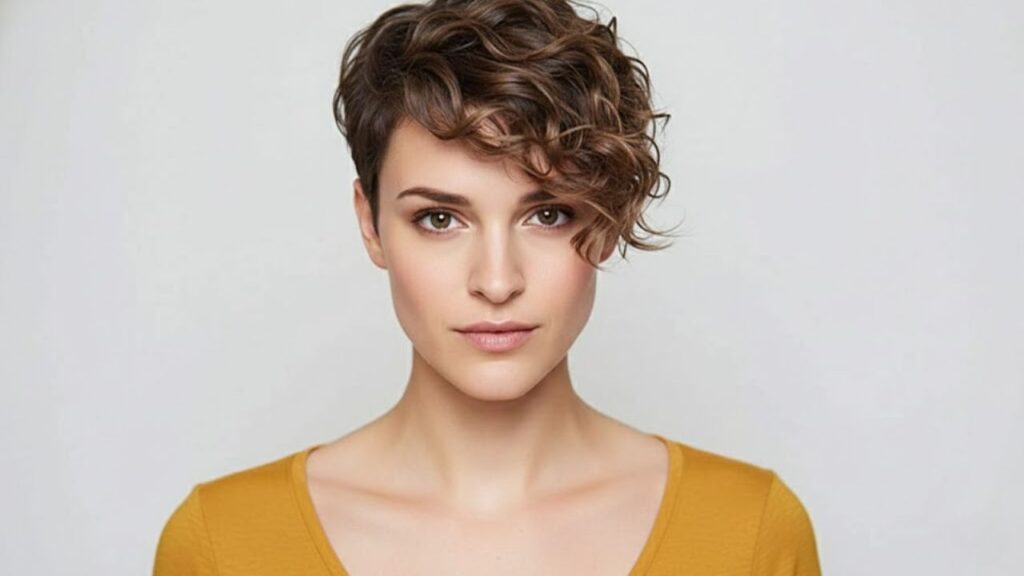
Why Short Hair Makes Cowlicks Stand Out
When you cut hair short the cowlick shows up and you can see its natural pattern. Longer hair has weight that falls over the swirl & pulls it down into place. Short hair lets the roots control which way it goes while the ends stay light. Barbers notice that crowns stick straight up after fades & front hairline swirls resist combing. Every short haircut makes the angles of the scalp & the strength of each strand more obvious so natural patterns become more visible & styling requires more effort.
Understanding Growth Patterns and Styling Physics
Hair growth angles are what cause cowlicks to form. Every strand grows out at its own angle & sometimes these angles spiral or shift direction suddenly. When hair is cut short it follows these natural angles closely and cowlicks become very visible. Longer hair has more weight to it which helps flatten the cowlick and make it less obvious. A buzz cut that measures one to two centimeters will show the cowlick clearly. As the hair gets longer it gains weight and starts to lay down more smoothly. Stylists who understand this pattern often plan major haircuts around the growth cycle to avoid the awkward stage when cowlicks are most noticeable before important occasions. Knowing how this works prevents people from blaming their stylist when a cowlick appears after a fresh cut.

Techniques to Tame Cowlicks on Short Hair
Styling works best when your hair is damp. Pat it dry with a towel and then apply a small amount of lightweight cream or mousse at the roots. Use your fingers or a small brush to guide the hair in the direction you want. Dry the roots with a hairdryer on medium heat and keep it moving. Finish by using cool air for 10 to 15 seconds to set the new angle. If you have stubborn swirls then use lighter products at the root and slightly heavier ones on the ends. Part your hair so it flows with the cowlick instead of against it to make daily styling easier.

Living with Your Cowlick
Instead of fighting the cowlick you should plan your hairstyle around it. Short and spiky hair turns swirls into built-in lift while longer styles provide subtle movement. Adjust partings and fringes to work with the cowlick rather than against it. This mindset transforms daily frustration into controlled volume & intentional style. Your cowlick becomes a natural fingerprint that shows up consistently through various cuts & lengths and styles. This makes each styling session a collaboration with your hair instead of a battle.

| Point clé | Détail | Intérêt pour le lecteur |
|---|---|---|
| Longueur vs. cowlick | Short hair exposes growth patterns; longer hair weighs them down | Comprendre pourquoi le même cowlick réagit différemment selon la coupe |
| Styling à la racine | Sécher et modeler la zone du cowlick depuis l’état humide, avec produit léger | Gagner du temps le matin et réduire les retouches dans la journée |
| Coupe adaptée | Travailler avec l’implantation naturelle, placer le cowlick là où le volume est utile | Choisir un style durablement facile à vivre, pas seulement beau en sortant du salon |
